
Most parents discover too late that a flashy machine with dozens of buttons can still turn sweet potatoes into lumpy mush and leave broccoli half-cooked. The quickest way to identify a reliable baby steamer blender is to focus on steaming performance, blending consistency, easy cleaning, and safety certifications—not marketing claims. A quality all in one baby food maker should steam ingredients evenly, blend them to the texture your baby needs, and save time rather than create extra work.
Making homemade baby food sounds simple until you are juggling feeding schedules, cleaning bottles, and trying to prepare nutritious meals every day. Many parents invest in a baby food maker expecting convenience, only to end up with difficult cleanup, uneven cooking, or poor blending results. The frustration grows when expensive appliances fail to deliver smooth purees or versatile textures for different developmental stages.
A steam-and-blend baby food maker combines steaming and blending into one appliance, allowing parents to cook and puree fruits, vegetables, and proteins in a single process. When chosen correctly, it can reduce preparation time, preserve nutrients, and make homemade baby food more practical for busy families.
This guide explains exactly how to find a steam-and-blend baby food maker that actually works, what features matter most, common mistakes to avoid, and how to compare different models before buying.
What Is a Steam-and-Blend Baby Food Maker?
A steam-and-blend baby food maker is a kitchen appliance that steams ingredients and blends them into baby-friendly textures using one machine.
Instead of transferring hot food from a steamer to a blender, parents can complete the entire preparation process in one container. This minimizes mess, reduces preparation time, and simplifies daily meal preparation.
Many modern models offer:
- Steam cooking
- Automatic blending
- Multiple texture settings
- Defrost functions
- Reheating capabilities
- Dishwasher-safe components
Parents who prioritize nutritious homemade meals often choose these appliances because steaming helps preserve vitamins better than boiling. Understanding how fresh ingredients retain nutritional value can also help families make healthier food decisions, much like the principles discussed in this guide to separating healthy food myths from facts.
Why Do Parents Prefer an All in One Baby Food Maker?
An all in one baby food maker saves time, reduces cleanup, and simplifies meal preparation compared to using separate appliances.
Parents often prepare food multiple times each week. Using a saucepan, food processor, blender, and storage containers separately creates unnecessary work. An integrated machine streamlines the process.
Key Benefits Include:
- Single-container cooking and blending
- Less kitchen cleanup
- Consistent puree textures
- Faster meal preparation
- Reduced countertop clutter
- Better portion control
For busy households, saving even 15–20 minutes per meal preparation session can add up significantly over several months.
Which Features Matter Most When Choosing a Baby Steamer Blender?
The most important features are steaming efficiency, blending quality, capacity, safety, and ease of cleaning.
Many manufacturers advertise advanced technology, but practical performance matters more than extra features. Focus on functionality first.
1. Steaming Performance
Steaming should cook ingredients evenly without leaving hard centers or overcooking softer foods.
Good steaming systems:
- Produce consistent steam distribution
- Cook vegetables thoroughly
- Maintain food moisture
- Preserve nutrients effectively
Foods commonly prepared include:
- Sweet potatoes
- Carrots
- Peas
- Apples
- Pears
- Broccoli
- Chicken
2. Blending Consistency
A high-quality blade system should create smooth purees without requiring repeated blending cycles.
Babies progress through multiple texture stages:
- Smooth purees (4–6 months)
- Thicker purees (6–8 months)
- Mashed textures (8–10 months)
- Chunkier foods (10+ months)
The blender should support each developmental stage.
3. Capacity
Capacity determines how much food you can prepare in a single batch.
| Family Size | Recommended Capacity |
|---|---|
| One Baby | 400–600 ml |
| Meal Prep Families | 600–1000 ml |
| Multiple Children | 1000 ml+ |
4. Easy Cleaning
Cleaning difficulty is one of the most common complaints among parents.
Look for:
- Dishwasher-safe parts
- Removable blades
- Wide openings
- Smooth internal surfaces
Machines with hidden crevices often trap food residue and increase maintenance time.
5. Safety Features
Safety should never be overlooked.
Important features include:
- BPA-free materials
- Automatic shutoff
- Overheating protection
- Secure locking mechanisms
- Stable non-slip base
How Can You Tell if a Baby Food Maker Actually Performs Well?
The best indicators are user reviews, texture consistency, steaming results, durability, and long-term reliability.
Parents often evaluate performance based on real-world daily use rather than marketing specifications.
Look for feedback mentioning:
- Smooth puree production
- Reliable steaming cycles
- Durability beyond one year
- Minimal leakage
- Easy cleaning
- Consistent operation
When researching options, comparing detailed product reviews can help narrow your choices. For example, parents looking for region-specific recommendations may benefit from this comprehensive review of the best baby food makers for homemade baby meal preparation.
Should You Choose Manual or Automatic Controls?
Automatic controls provide convenience, while manual controls offer greater customization.
The best option depends on your preferences and cooking habits.
| Feature | Manual Control | Automatic Control |
|---|---|---|
| Customization | Excellent | Moderate |
| Ease of Use | Moderate | Excellent |
| Learning Curve | Higher | Lower |
| Meal Prep Speed | Moderate | Fast |
| Precision | High | Program Based |
Most busy parents prefer automatic systems because they reduce hands-on preparation time.
How Important Is Nutrient Preservation When Making Homemade Baby Food?
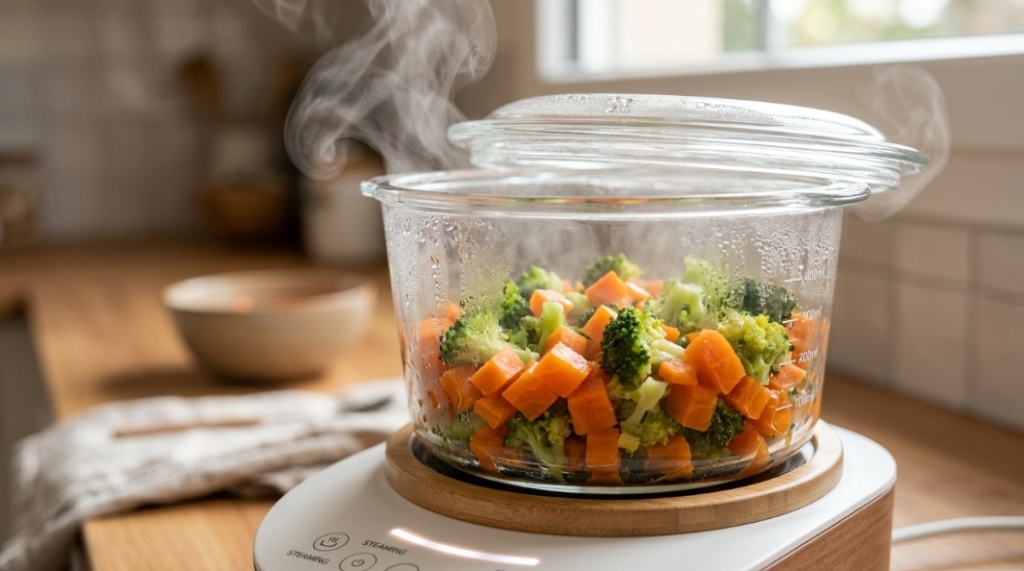
Nutrient preservation is one of the primary advantages of steam cooking.
Water-soluble vitamins such as Vitamin C and certain B vitamins can be reduced when foods are boiled in large amounts of water. Steaming helps preserve more nutrients because ingredients are exposed to less water during cooking.
Parents preparing homemade baby food often prioritize:
- Fresh fruits
- Fresh vegetables
- Lean proteins
- Whole grains
Steaming supports these nutritional goals while maintaining natural flavors.
What Capacity Is Best for Batch Cooking?
Larger containers are ideal for parents who prepare food in bulk and freeze portions.
Batch cooking offers several advantages:
- Fewer cooking sessions
- Lower daily workload
- Better meal planning
- Reduced food waste
Many families prepare:
- Weekly vegetable purees
- Fruit blends
- Protein combinations
- Mixed meals
Preparing multiple servings at once can significantly improve efficiency throughout the week.
Which Common Mistakes Should Parents Avoid?
The biggest mistakes are buying based solely on price, ignoring cleaning requirements, and overlooking capacity needs.
Choosing the Cheapest Option
Low-cost machines may save money initially but often lack durability and performance.
Ignoring Cleaning Design
Complicated cleaning routines frequently lead to frustration and reduced usage.
Buying Excess Features
Not every family needs advanced touchscreens, smartphone connectivity, or multiple specialty modes.
Overlooking Capacity
A container that is too small can require repeated cooking cycles.
Skipping Review Research
Real customer experiences often reveal long-term reliability issues that product descriptions never mention.
Are Expensive Baby Food Makers Worth the Extra Cost?
Higher-priced models are worth considering when they deliver better durability, stronger blending performance, and easier maintenance.
However, the most expensive machine is not always the best value.
Evaluate:
- Build quality
- Warranty coverage
- Customer reviews
- Replacement parts availability
- Ease of cleaning
- Performance consistency
A mid-range model with excellent reliability often provides better value than a premium machine loaded with unnecessary features.
What Questions Should You Ask Before Buying?
Asking the right questions helps identify whether a machine will fit your family’s routine.
- How smooth are the purees?
- How long does steaming take?
- Can parts go in the dishwasher?
- What is the container capacity?
- Does it support chunkier textures?
- Is it BPA-free?
- What warranty is included?
- Are replacement parts available?
- How noisy is the blender?
- How easy is daily cleaning?
Answering these questions can eliminate many unsuitable options before purchase.
Conclusion: How Do You Find a Steam-and-Blend Baby Food Maker That Actually Works?
The best steam-and-blend baby food maker is one that reliably steams food, blends smooth textures, cleans easily, and fits your family’s meal-preparation habits. Focus on practical performance rather than marketing claims. Prioritize steaming efficiency, blending consistency, safety certifications, easy maintenance, and sufficient capacity.
Parents who prepare homemade baby food regularly often discover that convenience comes from simplicity. A dependable all in one baby food maker should reduce kitchen work, support healthy feeding habits, and make daily meal preparation more manageable. Understanding how different food cultures approach fresh ingredient preparation can also provide useful inspiration, as highlighted in this exploration of Copenhagen’s vibrant food scene beyond traditional markets.
Before purchasing, compare features carefully, read verified reviews, and choose a model that matches your feeding routine rather than simply selecting the most expensive option. A well-chosen baby steamer blender can save time, reduce stress, and make homemade nutrition easier throughout your baby’s developmental journey.
Frequently Asked Questions
Is a baby steamer blender better than using a regular blender?
Yes. A baby steamer blender combines cooking and blending in one appliance, reducing preparation time, cleanup, and food transfers while improving convenience for parents.
Can an all in one baby food maker cook meat?
Most quality models can steam lean meats such as chicken and turkey. Always ensure meat reaches safe cooking temperatures before serving.
At what age can babies eat food made in a baby food maker?
Many babies begin pureed foods around six months of age, depending on pediatric guidance and developmental readiness.
How often should I clean my baby food maker?
The appliance should be cleaned after every use to prevent bacterial growth and maintain optimal performance.
Can I freeze food prepared in a baby food maker?
Yes. Homemade baby food can typically be portioned into freezer-safe containers or trays and stored for future meals.
What ingredients work best in a baby steamer blender?
Popular ingredients include sweet potatoes, carrots, peas, apples, pears, bananas, broccoli, squash, chicken, and oatmeal.
How long does it take to make baby food?
Most steam-and-blend cycles take between 15 and 30 minutes, depending on ingredient type and quantity.


