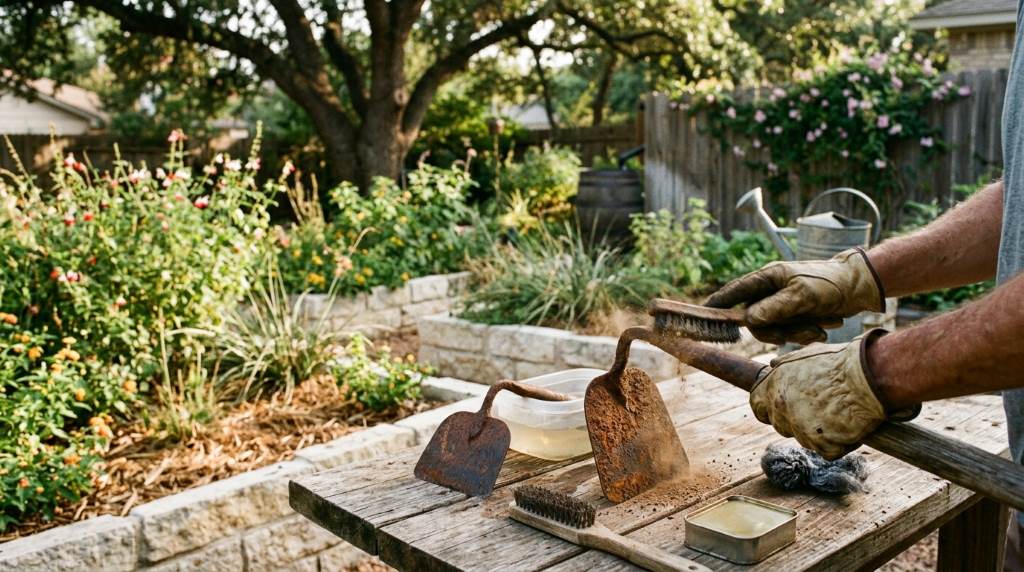
Austin gardeners often deal with rusty tools because of changing weather, humid mornings, and long outdoor storage periods. According to the United States Environmental Protection Agency, metal corrosion increases faster in humid environments with regular moisture exposure. In Texas, frequent temperature swings also speed up rust formation on garden equipment. Therefore, knowing the best ways to restore a rusty garden hoe in Austin, TX gardens can save money and extend tool life. Many homeowners also use methods like sharpen garden hoe with metal file to improve cutting performance after rust removal. Proper maintenance keeps your hoe effective for soil preparation and weed control throughout the year.
Why Garden Hoes Rust Quickly in Austin, TX
Austin experiences hot summers, seasonal rain, and occasional humidity spikes during spring and fall. These conditions create the perfect environment for metal oxidation on garden tools. Even small amounts of moisture left on a hoe can trigger rust growth within days. As a result, many local gardeners notice orange or brown patches appearing after heavy rain.
Outdoor storage also contributes to corrosion problems in Central Texas gardens. Many people leave tools in sheds without ventilation or protection from moisture buildup. Additionally, dirt and fertilizer residue can trap water against the metal surface for long periods. This combination weakens the blade and reduces digging efficiency over time.
Clay-heavy soil in Austin can worsen rust problems as well. Wet clay sticks to metal surfaces and often dries slowly after gardening sessions. Consequently, trapped moisture continues attacking the steel even after the tool is stored away. Regular cleaning helps reduce this damage significantly.
Signs Your Garden Hoe Needs Restoration
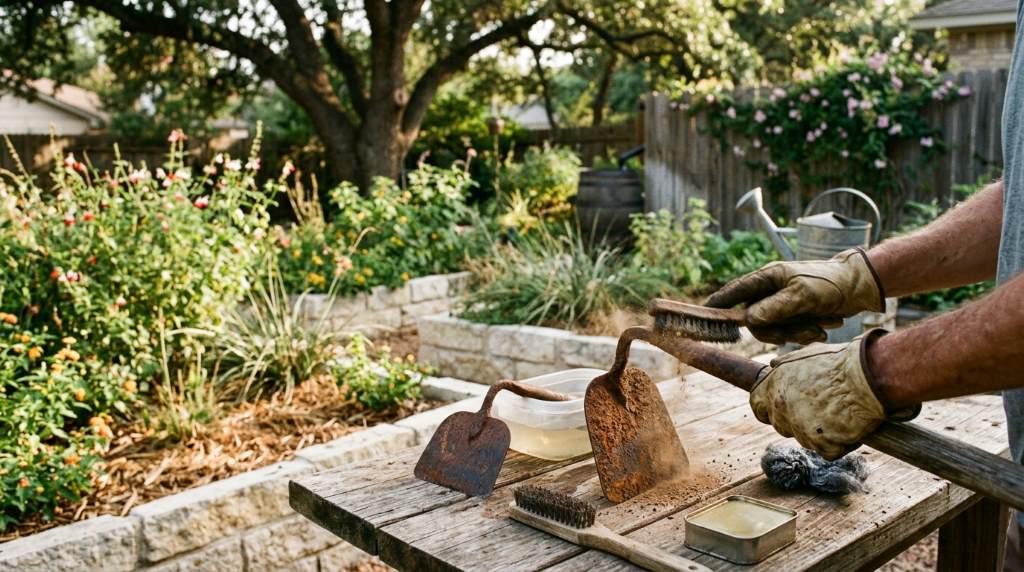
Rusty hoes usually show visible orange spots along the blade and edges. However, deeper corrosion may create pitted surfaces or flaky metal sections. These rough spots reduce the hoe’s ability to cut weeds cleanly. Therefore, gardeners often struggle with tougher soil conditions when tools remain untreated.
Another common sign involves reduced sharpness during normal garden work. A rusty edge drags through soil instead of slicing smoothly. Moreover, excess rust can weaken the blade and increase the chance of cracking. Restoring the hoe early prevents more expensive replacements later.
Wooden handles may also show wear alongside metal corrosion. Moisture exposure can loosen the connection between the blade and handle over time. Consequently, a full restoration should include inspection of all tool components. Safe handling matters just as much as blade performance.
Essential Supplies for Restoring a Rusty Garden Hoe
Before starting the restoration process, gather all necessary materials in one workspace. This preparation makes the cleaning process safer and more efficient. Most restoration tools are affordable and easy to find at local hardware stores in Austin. Furthermore, many items may already exist in your garage or garden shed.
Basic Restoration Supplies
- Wire brush or steel wool
- White vinegar or rust remover
- Bucket or container for soaking
- Sandpaper in multiple grits
- Clean cloths or rags
- Protective gloves
- Safety glasses
- Metal file for sharpening
- Lubricating oil
Using proper tools reduces damage to the hoe during cleaning. Additionally, safety gear protects your hands and eyes from metal particles. Austin gardeners often prefer vinegar because it offers a low-cost and eco-friendly cleaning option.
Step-by-Step Process to Remove Rust
Clean the Hoe Thoroughly
Start by removing dirt and plant residue from the blade using water and a stiff brush. Dry the tool completely with a clean towel before moving to the next step. This cleaning stage helps expose hidden rust patches more clearly. Moreover, removing debris improves the effectiveness of rust treatments.
Inspect the entire tool carefully after cleaning the surface. Pay close attention to blade corners and attachment points where rust commonly develops. Minor corrosion usually appears as surface discoloration. However, deep rust may require extra sanding and treatment.
Soak the Rusted Blade
Place the rusty portion of the hoe into a bucket filled with white vinegar. Let the blade soak for several hours or overnight depending on the severity of corrosion. Vinegar naturally dissolves rust without damaging most steel surfaces. Therefore, many Austin homeowners choose this method for regular tool restoration.
After soaking, scrub the blade with steel wool or a wire brush. Rust should loosen easily from the surface after proper soaking time. Continue scrubbing until most discoloration disappears. Then rinse the blade thoroughly with clean water.
Sand and Smooth the Surface
Use medium-grit sandpaper to remove remaining rust spots and rough textures. Work evenly across the blade to avoid creating uneven edges. Fine-grit sandpaper can then smooth the surface for a cleaner finish. Additionally, sanding helps prepare the blade for sharpening.
Deep rust pits may remain visible after sanding, but they usually do not affect performance significantly. However, severely damaged blades may need replacement if structural weakness appears. Consistent maintenance prevents this level of deterioration in the future.
How to Sharpen the Restored Hoe
Sharpening improves cutting efficiency after rust removal. A dull blade forces gardeners to use more effort during soil preparation and weed removal. Consequently, proper sharpening saves both time and physical strain in Austin gardens. Many gardeners complete this step immediately after sanding.
Clamp the hoe securely before filing the edge. Hold the metal file at the original blade angle while moving in one consistent direction. Avoid aggressive filing because excessive metal removal weakens the edge. Instead, use smooth and controlled strokes.
Check sharpness carefully during the process. The edge should feel clean and slightly sharp without becoming razor-like. Garden hoes perform best with durable working edges rather than knife-level sharpness. Therefore, moderate sharpening usually provides the best results.
Protecting the Hoe from Future Rust
Austin weather can quickly undo restoration work if tools remain unprotected. Therefore, prevention matters just as much as cleaning and sharpening. Simple maintenance habits dramatically reduce future rust buildup. Consistency is the key to extending tool lifespan.
Dry Tools After Every Use
Always wipe moisture and soil from the hoe immediately after gardening. Even morning dew can trigger rust formation on exposed metal surfaces. Consequently, drying the blade after each use prevents many corrosion problems. A simple cloth works well for quick cleaning.
Apply Protective Oil
A light coating of oil creates a barrier against moisture and oxygen. Many gardeners use mineral oil or machine oil for long-term protection. Apply a thin layer across the metal surface using a clean cloth. This step becomes especially important during rainy Austin seasons.
Store Tools Properly
Store garden tools in dry and ventilated areas whenever possible. Avoid leaving hoes directly on concrete floors because moisture can transfer into metal surfaces. Hanging tools on wall hooks helps improve airflow around the blade. Additionally, covered storage reduces exposure to humidity fluctuations.
Best Rust Removal Methods for Austin Gardeners
Different restoration methods work better depending on rust severity and available supplies. Austin homeowners often choose techniques based on budget and convenience. Fortunately, several effective options exist for restoring garden hoes safely. Understanding these methods helps gardeners select the right approach.
Vinegar Method
The vinegar soak remains one of the most affordable rust removal techniques. It works especially well for moderate surface corrosion. Additionally, vinegar produces fewer harsh fumes than chemical removers. This makes it suitable for home workshops and garages.
Baking Soda Paste
Baking soda mixed with water creates a mild abrasive cleaning paste. Apply the mixture directly to rust spots and scrub gently with steel wool. This method works best for light rust and routine maintenance. Furthermore, baking soda is safe and widely available.
Commercial Rust Removers
Heavy rust sometimes requires stronger chemical solutions for complete removal. Many hardware stores in Austin sell specialized rust dissolvers designed for garden tools. Always follow product safety instructions carefully during use. Protective gloves and ventilation remain important during chemical treatments.
Common Mistakes to Avoid During Restoration
Some gardeners accidentally damage their tools while trying to remove rust aggressively. Over-sanding can thin the blade and weaken its structure permanently. Therefore, gentle and consistent cleaning methods work better than excessive force. Patience usually delivers the best restoration results.
Leaving vinegar on metal too long may also create surface discoloration. While vinegar removes rust effectively, extended soaking can affect some steel finishes. Checking progress regularly helps prevent unnecessary wear. Consequently, shorter soaking sessions often provide better control.
Another mistake involves storing the tool before it fully dries. Trapped moisture restarts corrosion almost immediately after restoration. Always dry the hoe completely before applying oil or placing it in storage. This small step greatly extends the effectiveness of restoration work.
Seasonal Garden Hoe Maintenance Tips for Austin
Austin gardeners face different maintenance challenges throughout the year. Summer heat can dry wooden handles and loosen fittings over time. Meanwhile, spring rain increases moisture exposure and rust risk. Adjusting maintenance routines seasonally improves long-term tool performance.
During spring, inspect tools more frequently because heavy rain encourages rapid corrosion. Clean mud and wet soil from blades immediately after use. Additionally, reapply protective oil more often during humid periods. Preventive care saves significant restoration effort later.
Summer requires attention to wooden handle condition as well. Heat and sun exposure can crack untreated wood surfaces. Applying linseed oil occasionally helps preserve handle strength and comfort. Therefore, full tool maintenance should include both metal and wood components.
Fall and winter storage preparation also matters in Austin gardens. Before storing tools for longer periods, clean and oil them thoroughly. Use wall-mounted racks or elevated shelves whenever possible. Proper offseason care keeps tools ready for spring planting season.
Eco-Friendly Rust Removal Options
Many Austin residents prefer environmentally friendly gardening practices. Fortunately, several natural rust removal methods avoid harsh chemicals completely. These options reduce environmental impact while still delivering effective results. Additionally, they remain safe for home gardens and pets.
Lemon juice combined with salt creates a mild acidic cleaner for light rust stains. Apply the mixture directly to affected areas and let it sit briefly before scrubbing. This method works best for early-stage corrosion. Moreover, it uses common household ingredients.
Potato slices can also help remove minor rust because potatoes contain oxalic acid naturally. Rubbing a cut potato over rust spots sometimes loosens corrosion surprisingly well. Although slower than vinegar, this method remains safe and biodegradable. Natural solutions appeal to many organic gardeners in Austin.
When to Replace Instead of Restore
Not every rusty hoe can be restored safely or effectively. Deep cracks, severe pitting, or bent blades may create safety concerns during use. In these situations, replacement often becomes the smarter option. Continuing to use damaged tools increases injury risk.
Loose blade attachments can also signal structural failure. If tightening the connection no longer stabilizes the hoe, replacement may become necessary. Furthermore, extremely thin blades lose durability even after sharpening. Garden efficiency suffers when tools no longer maintain proper edge strength.
However, most lightly to moderately rusted hoes respond well to restoration. Regular care often extends tool lifespan for many years in Austin gardens. Therefore, early intervention remains the best strategy for avoiding expensive replacements.
Conclusion
Restoring a rusty garden hoe in Austin, TX gardens is both practical and cost-effective for homeowners and gardening enthusiasts. With proper cleaning, rust removal, sharpening, and storage habits, you can extend the life of your gardening tools significantly. Austin’s humid conditions make regular maintenance especially important throughout the year. Fortunately, most restoration methods require only basic supplies and a little patience. Start restoring your garden hoe today and keep your garden tools ready for every planting season.
FAQs
How often should I clean my garden hoe in Austin, TX?
You should clean and dry your garden hoe after every gardening session to prevent rust buildup.
Can vinegar damage a garden hoe blade?
Vinegar is generally safe for steel tools when used for limited soaking periods.
What is the best oil for preventing rust on garden tools?
Mineral oil and machine oil both work well for protecting garden hoes from moisture.
Should a garden hoe be razor sharp?
No, a moderately sharp edge works best for durability and effective soil cutting.
Can severe rust ruin a garden hoe permanently?
Yes, deep rust can weaken the blade structure and make restoration unsafe.
Related Reads
Explore: How the Callaway Paradym Helps High Handicappers Hit Straighter
Learn: How to Decide if Versace Eros Is Worth It (Full Honest Review 2026)