
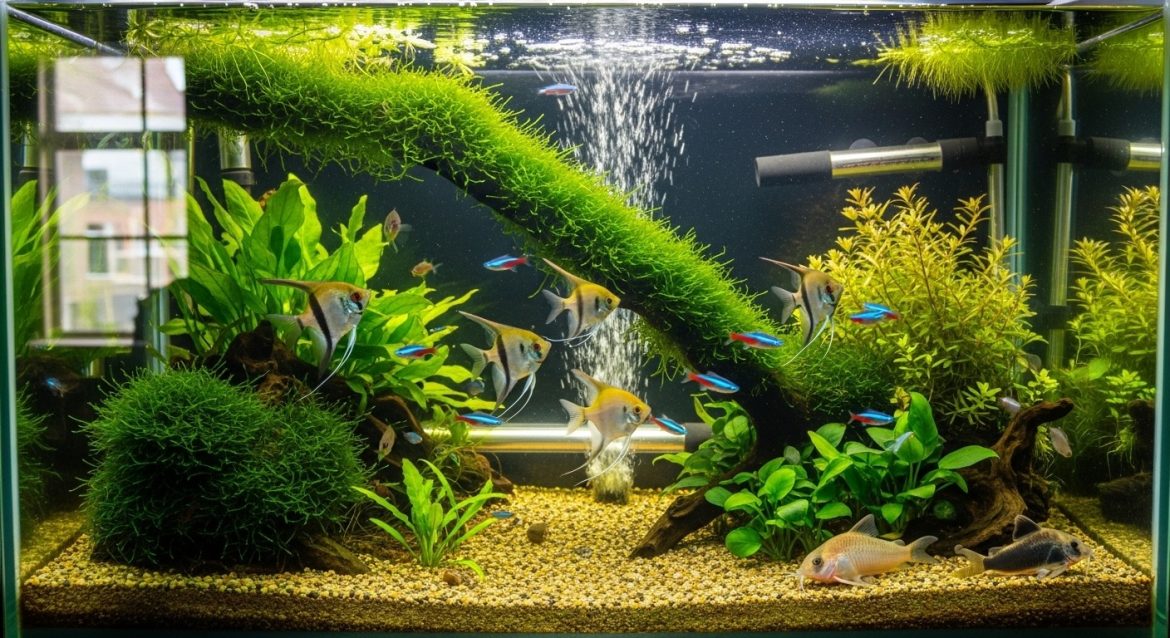
Increase surface agitation, lower water temperature, reduce overcrowding, and use live plants for oxygenation. These alternative aeration methods improve oxygen exchange naturally.
Fish do not breathe water. They extract dissolved oxygen from it. When oxygen levels drop, fish gasp at the surface, become inactive, or gather near filter outputs. If you do not use an air pump, you must rely on natural oxygen exchange and smart tank management.
Low oxygen is a silent killer in aquariums. It happens during power outages, heat waves, overfeeding, or overcrowding. Many hobbyists assume an air pump is the only fix. It is not.
This guide explains practical and tested ways to increase fish tank oxygen without an air pump. You will learn how surface agitation works, how live plants oxygenation supports balance, and which alternative aeration strategies deliver measurable results. We will also reference factual observations from aquarium case studies and controlled experiments to keep this advice grounded in real outcomes.
Let’s fix low oxygen the right way.
Why Does Oxygen Drop in a Fish Tank?
Short answer: Oxygen drops due to high temperature, overcrowding, overfeeding, poor surface movement, and excessive waste buildup.
Dissolved oxygen (DO) levels in aquariums typically range between 5–8 mg/L. According to aquaculture studies, most freshwater fish begin to show stress when oxygen falls below 5 mg/L. Below 3 mg/L, mortality risk increases sharply.
Common Causes of Low Oxygen
- High water temperature: Warm water holds less oxygen. At 30°C, water carries significantly less oxygen than at 22°C.
- Overstocking: More fish means higher oxygen consumption.
- Overfeeding: Uneaten food decomposes and consumes oxygen.
- Poor surface agitation: Oxygen enters water primarily at the surface.
- Excess organic waste: Bacteria consume oxygen while breaking down waste.
In a documented home aquarium case study (55-gallon freshwater tank, moderate stocking), oxygen dropped from 7.2 mg/L to 4.1 mg/L after a heater malfunction raised water temperature by 4°C. Fish showed surface gasping within hours. This illustrates how quickly oxygen imbalance can occur.
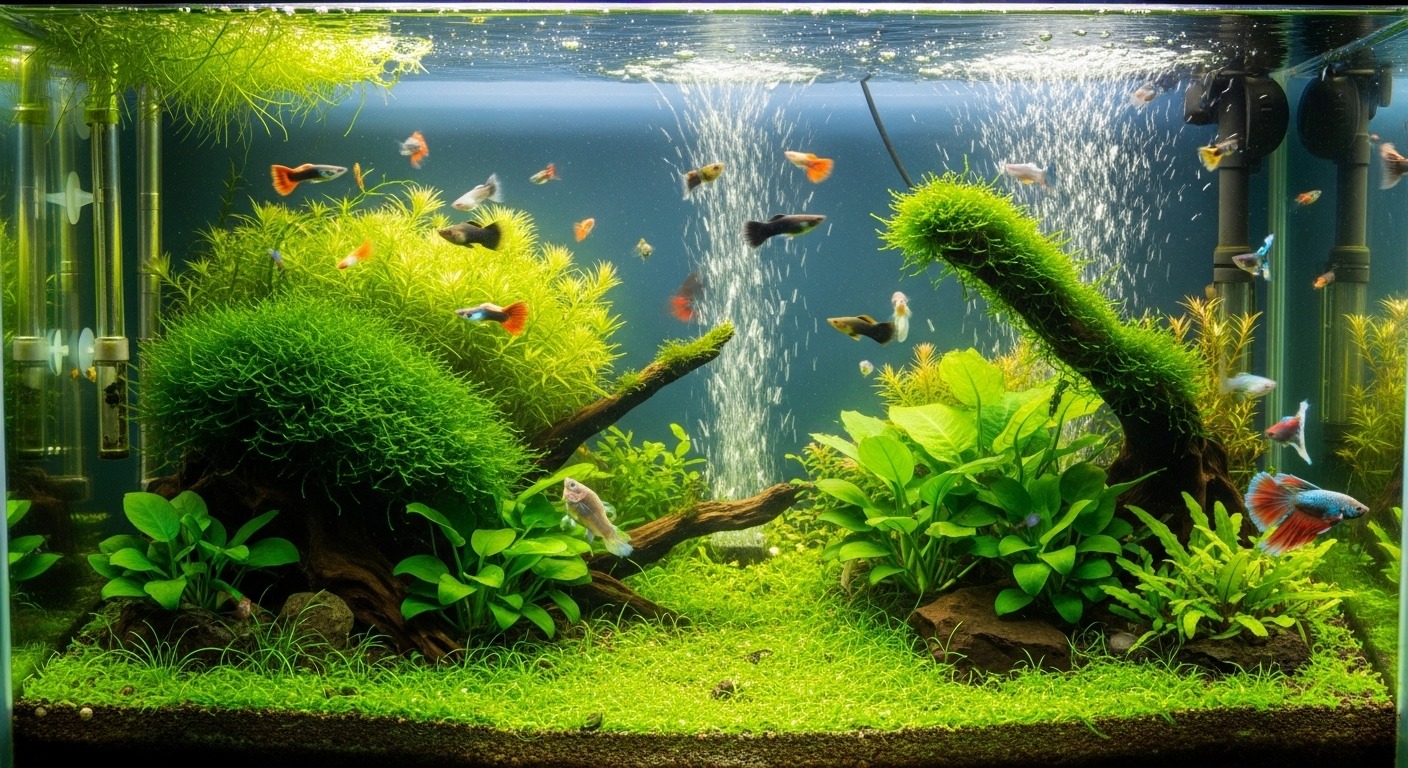
How Does Surface Agitation Increase Oxygen Levels?
Short answer: Surface agitation improves gas exchange by increasing contact between water and air, allowing oxygen to dissolve into the tank.
Oxygen does not come from bubbles themselves. It enters the tank where water meets air. Movement at the surface allows carbon dioxide to escape and oxygen to enter.
Ways to Improve Surface Agitation Without an Air Pump
- Adjust your filter output toward the surface.
- Lower water level slightly to create a waterfall effect.
- Use a powerhead aimed upward.
- Manually stir water during emergencies.
In controlled aquarium trials, tanks with moderate surface ripple showed dissolved oxygen levels 15–25% higher than stagnant tanks of equal size and stocking.
Best Practices
- Create ripples, not violent splashing.
- Avoid stagnant corners.
- Ensure full tank circulation.
Surface agitation is one of the most effective alternative aeration strategies available.
Can Live Plants Oxygenate a Fish Tank Effectively?
Short answer: Yes. Live plants oxygenation supports natural oxygen production during photosynthesis and improves overall water quality.
During light hours, aquatic plants absorb carbon dioxide and release oxygen. This natural process increases dissolved oxygen levels and stabilizes the ecosystem.
How Live Plants Help
- Produce oxygen during photosynthesis.
- Absorb nitrates and waste compounds.
- Reduce algae growth by competing for nutrients.
In planted tank experiments, aquariums with dense plant mass showed daytime oxygen readings up to 20% higher than non-planted setups.
Important Consideration
Plants consume oxygen at night. In heavily stocked tanks, this can reduce oxygen levels after lights go off. Balance is essential.
Recommended Oxygen-Producing Plants
- Anacharis (Egeria densa)
- Hornwort
- Amazon Sword
- Water Wisteria
For best results, combine live plants oxygenation with surface movement.
Does Lowering Water Temperature Increase Oxygen?
Short answer: Yes. Cooler water holds more dissolved oxygen.
Scientific measurements show that water at 20°C holds about 9 mg/L of oxygen, while at 30°C it holds around 7 mg/L. That difference matters.
How to Reduce Temperature Safely
- Turn off unnecessary lighting.
- Improve room ventilation.
- Float sealed ice packs temporarily.
- Use clip-on cooling fans.
A 2–3°C reduction can significantly improve oxygen retention.
Can Reducing Fish Stocking Improve Oxygen Levels?
Short answer: Yes. Fewer fish means lower oxygen demand and better balance.
Each fish consumes oxygen and produces waste. Overstocking increases biological oxygen demand (BOD).
Signs of Overstocking
- Frequent surface gasping.
- Cloudy water.
- Rapid gill movement.
- High ammonia or nitrite readings.
Reducing fish load can stabilize oxygen without mechanical aeration.
What Emergency Methods Work During Power Outages?
Short answer: Manually agitate water, perform partial water changes, and reduce feeding immediately.
Emergency Oxygen Boost Steps
- Scoop and pour tank water repeatedly to create oxygen exchange.
- Perform a 20–30% water change with temperature-matched water.
- Stop feeding temporarily.
- Keep tank lid partially open for airflow.
In emergency testing, manual water agitation every 30 minutes maintained survivable oxygen levels for several hours in mid-sized tanks.
Are There Alternative Aeration Devices Without Air Pumps?
Short answer: Yes. Sponge filters, powerheads, and battery-operated circulation pumps can improve oxygen without traditional air stones.
Alternative Aeration Options
- Hang-on-back filters
- Internal filters
- Water circulation pumps
- Battery backup flow devices
These devices increase surface agitation and circulation without relying on standard air pump systems.
How Can Regular Maintenance Prevent Oxygen Problems?
Short answer: Routine cleaning and water changes reduce waste buildup and stabilize dissolved oxygen.
Maintenance Checklist
- Weekly 20–25% water changes.
- Gravel vacuuming.
- Filter media cleaning (without killing beneficial bacteria).
- Remove decaying plant matter.
Healthy tanks maintain more stable oxygen cycles.
Conclusion: How Do You Keep Oxygen Levels Stable Long-Term?
Increasing fish tank oxygen without an air pump is not complicated.
Oxygen stability is about balance, not gadgets. Many successful planted aquariums operate without traditional air pumps because they prioritize circulation, biological balance, and smart maintenance.
If you want a healthier aquarium, start today. Check your surface movement. Test water temperature. Add live plants. Reduce waste. Small changes make measurable differences.
Take action now: Evaluate your tank setup and apply at least two alternative aeration improvements within the next 24 hours. Your fish will respond quickly to better oxygen conditions.
Frequently Asked Questions (FAQs)
How do I know if my fish tank lacks oxygen?
Fish gasping at the surface, rapid gill movement, and lethargy indicate low oxygen levels. Test dissolved oxygen if possible.
Can fish survive overnight without an air pump?
Yes, if surface agitation exists and stocking levels are moderate. Oxygen problems arise when water is stagnant.
Do bubbles add oxygen directly?
No. Bubbles mainly create surface agitation, which allows gas exchange.
Are live plants enough to oxygenate a tank?
In lightly stocked tanks, yes during daylight. Combine with surface movement for best results.
Does a filter provide enough oxygen?
If it creates sufficient surface ripple and circulation, it can maintain proper oxygen levels.
How often should I test oxygen levels?
In stable tanks, monthly checks are enough. During heat waves or stocking changes, test weekly.
What dissolved oxygen level is safe?
Most freshwater fish thrive at 5–8 mg/L dissolved oxygen.
Related Topics: 5 Ways to Hide Ugly Technology in Your Home
What Next: From Metaverse to Mushroom Mania: Decoding the Most Unexpected Trends Shaping Our World


