If you live in California, you already know the drill: your skin feels tight by midday, your hands look a little ashy, and the air seems to suck every drop of moisture right out of you. Now imagine that sensation on your baby’s delicate skin. Between the dry heat inland, the salty ocean breeze along the coast, and the constant indoor air conditioning, California’s climate presents a unique challenge for infant skincare. Finding the right baby lotion for california dry skin isn’t just about picking the first bottle with a cute animal on it. It’s about understanding ingredients, knowing your local climate, and recognizing what your baby’s skin actually needs. This article breaks down exactly how to make that choice, what ingredients to look for, what to avoid, and how to build a simple routine that keeps your little one comfortable.
Key Takeaways
- California’s varied climate—from arid inland heat to coastal humidity—requires a baby lotion that balances hydration with barrier repair, not just surface moisture.
- Creams and ointments are generally more effective than lightweight lotions for moderate to severe dryness, especially in low-humidity environments.
- Ingredients like ceramides, colloidal oatmeal, and shea butter provide lasting relief, while fragrances and essential oils are common triggers for irritation.
- Applying moisturizer within three minutes after a bath and layering it over slightly damp skin significantly improves absorption and effectiveness.
- What works in San Francisco’s fog may not work in Palm Springs’ desert heat, so expect to adjust your baby’s skincare routine seasonally and regionally.
Why California’s Climate Is Tough on Baby Skin
California isn’t just one climate. It’s a patchwork of microclimates, each with its own impact on skin. In Southern California, the Santa Ana winds can drop humidity levels into single digits, creating conditions similar to a desert. In the Central Valley, summer temperatures routinely exceed 100°F, leading to sweat and potential heat rash. Along the coast, the marine layer provides moisture, but the salty air and wind can still dry out unprotected skin.
Indoor environments add another layer of stress. Air conditioning, central heating, and even water softeners or hard water can strip natural oils from a baby’s skin. This strips the skin barrier faster than it can repair itself. The result? Dry patches, redness, flaking, and sometimes eczema flare-ups. As a parent in California, you aren’t just looking for a cosmetic product; you’re looking for a functional shield against a chronic environmental assault.
According to pediatric dermatologists, a baby’s skin is thinner and produces less natural oil (sebum) than adult skin. This means it loses moisture more quickly and is more vulnerable to external irritants. The baby lotion for california dry skin you choose must therefore do more than just feel nice—it must actively work to repair and protect an immature skin barrier against these harsh regional conditions.
Lotion, Cream, or Ointment: Which Texture Works Best?
The difference between these three consistencies is not just about thickness. It’s about the water-to-oil ratio, which determines how effective the product will be for different levels of dryness.
If you’re dealing with mild, occasional tightness, a lotion (high water content, low oil) is fine and feels lightweight. However, for California’s notoriously dry conditions—especially during fall and winter—a cream (balanced water and oil) or an ointment (high oil, low water) is almost always the better choice.
When to Choose a Cream
Creams are the “sweet spot” for most babies in California. They are thick enough to actually hydrate the deeper layers of skin, yet they absorb reasonably well without leaving a greasy residue that attracts dirt and lint. Look for creams that contain occlusive ingredients like petrolatum, dimethicone, or mineral oil—these form a physical barrier on the skin to prevent transepidermal water loss (TEWL).
When a Lotion Is Enough
There are exceptions. If you live in a coastal city like San Francisco or Monterey, where the fog keeps humidity relatively high, a lightweight lotion may be sufficient during the summer months. Also, if your baby has acne-like bumps (milia) or heat rash (prickly heat), a thick ointment could clog pores and worsen the condition. In these instances, opt for a lighter, water-based lotion that hydrates without suffocating the skin.
The Case for Ointments (and Their Drawbacks)
Ointments (like plain petroleum jelly or Aquaphor) are the most effective at sealing in moisture. They are the “gold standard” for treating eczema and severe dryness. However, they are sticky and can transfer onto clothing, furniture, and your hands. They are best used as a spot treatment on elbows, knees, and cheeks rather than as an all-over body application, unless your pediatrician recommends otherwise for severe flare-ups.
Key Ingredients to Look For in California
Rather than memorizing brand names, learn to read the ingredient list. The ideal baby lotion for California’s dry climate should contain a mix of humectants (to pull moisture into the skin), emollients (to soften), and occlusives (to seal it all in).
Ceramides
Ceramides are lipids (fats) naturally found in the skin barrier. They act like the “mortar” between the “bricks” of your skin cells. Babies with dry skin or eczema often have lower ceramide levels. Using a lotion that contains synthetic ceramides (like Ceramide NP or Ceramide AP) helps restore barrier function, locking moisture in and keeping irritants out. This is arguably the most important ingredient to look for.
Colloidal Oatmeal
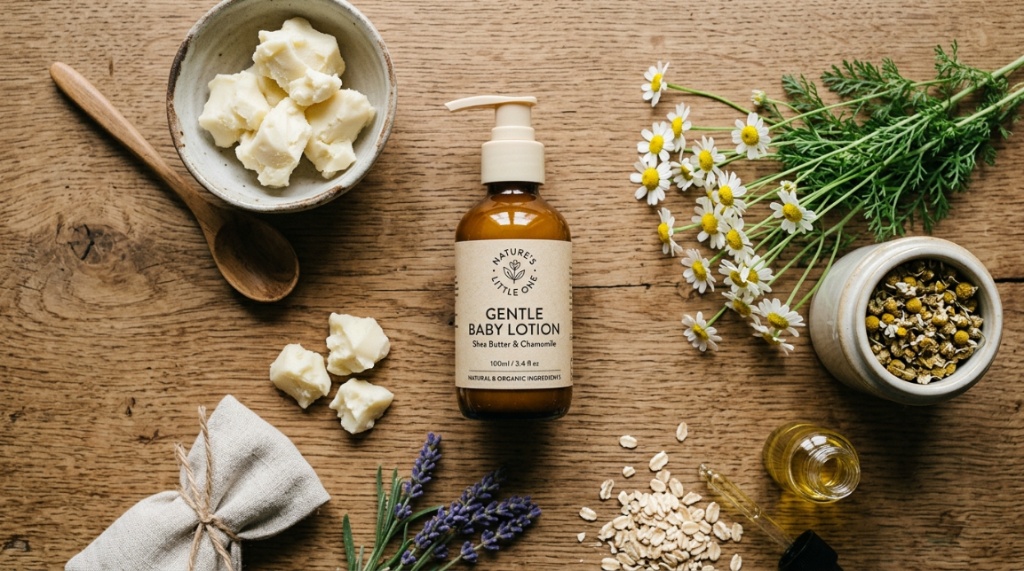
Colloidal oatmeal is finely ground oats that are FDA-approved as a skin protectant. It contains avenanthramides, which are naturally anti-inflammatory. This is excellent for soothing itchy, irritated skin that results from persistent dryness. It creates a protective film on the skin and helps restore normal pH levels.
Shea Butter and Glycerin
Shea butter is an excellent source of fatty acids and vitamins, making it a heavy-duty emollient. Glycerin is a powerful humectant that draws moisture from the air into the outer layer of skin. However, if the humidity is extremely low (below 30%), glycerin can actually pull moisture from the deeper layers of the skin to the surface, where it evaporates. That’s why pairing a humectant like glycerin with an occlusive like petrolatum or mineral oil is so critical in dry climates.
Pro-Vitamin B5 (Panthenol)
This is a humectant and skin-soothing agent that also promotes skin healing. It helps reduce redness and irritation while keeping the skin feeling smooth. It is a common ingredient in sensitive-skin formulations because it is gentle and effective.
Ingredients to Avoid (The CA Irritants)
Just as important as what’s in the lotion is what’s not in it. In a dry environment, the skin is already compromised, meaning it is more vulnerable to irritants.
Fragrances and Essential Oils
This is the biggest culprit. Even “natural” essential oils (like lavender or citrus) can be highly irritating to a baby’s immature skin, especially when the skin barrier is already compromised by dry air. They can cause contact dermatitis, allergic reactions, and worsen eczema. Always choose unscented products. If a product smells like “baby” or “clean laundry,” it likely contains masking fragrances that do the same damage.
Alcohols and Astringents
Check for the suffix “-ol” or words like “denatured alcohol,” “SD alcohol,” or “isopropyl alcohol.” These are fast-drying alcohols used to make lotions feel lightweight. They strip the skin of its natural oils, which is counterproductive in a dry environment. Some fatty alcohols (like cetyl or stearyl alcohol) are safe and beneficial, so you don’t need to avoid all alcohols—just the drying, short-chain ones.
Parabens and Sulfates
While the research on parabens (preservatives) is ongoing, many parents prefer to avoid them due to potential endocrine-disrupting effects. Sulfates (like Sodium Lauryl Sulfate or SLS) are detergents used to make products foam. They can strip the skin barrier, leading to increased water loss. While SLS is more common in washes than lotions, it’s a label to watch for double-checking.
How to Apply Lotion for Maximum Effectiveness
You can buy the most expensive, dermatologist-recommended lotion on the market, but if you apply it wrong, it won’t work. Here is the 3-minute rule that makes a significant difference in a dry climate.
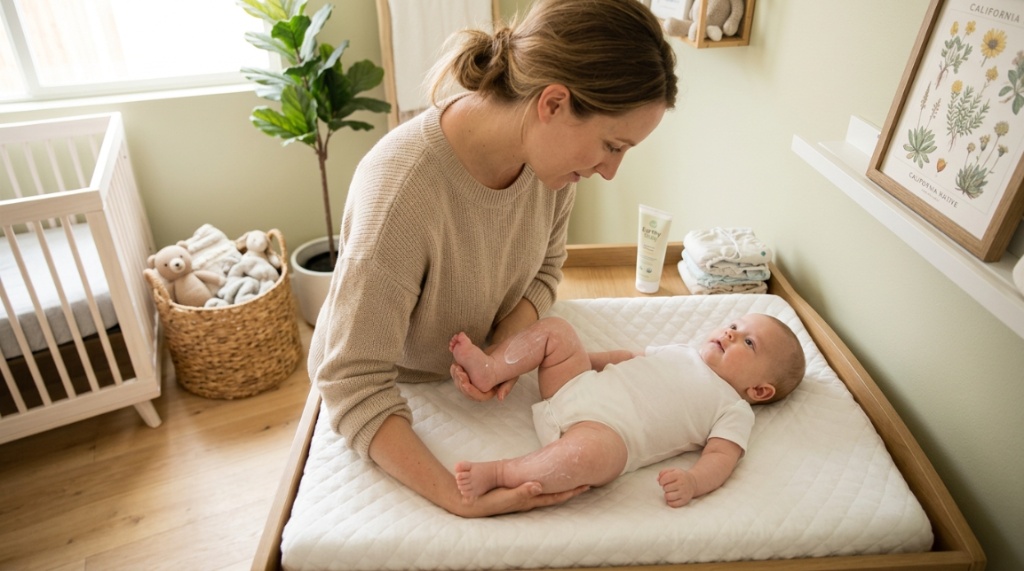
Immediately after bathing your baby, pat them dry with a towel. Do not rub. Rubbing causes friction that irritates the skin. They should be slightly damp, not soaking wet. Apply the lotion within three minutes of coming out of the bath. This traps the water molecules from the bath onto the skin, giving the humectants in the lotion something to hold onto. If you wait until the skin is completely dry to the touch, you are only moisturizing the top layer, and you won’t get the deep hydration you’re aiming for.
Daytime Touch-Ups
You should plan to moisturize at least twice a day—once after a bath (or before bedtime) and once in the morning. For babies with severe dryness, a mid-day application is also beneficial. Keep a bottle in your diaper bag. A good habit for California parents is to apply a small amount to the face and hands before going outside, even if it’s just for a stroll. The wind and sun exposure can quickly undo a morning application.
The “Thin Layer” Rule
Don’t glob it on. You want a thin, even layer that soaks in within a few minutes. If it pools in the creases of the neck or behind the knees, it can cause friction and moisture buildup, leading to a yeast rash. Rub it between your own palms first to warm it up—this helps it spread more easily and reduces the sensation of cold cream on their skin.
California Microclimates: Adjusting Your Routine
One of the most overlooked factors is that California isn’t a monolith. Using the same product year-round in different regions can lead to problems.
Inland Heat vs. Coastal Humidity
| Environment | Skin Challenge | Lotion Strategy |
|---|---|---|
| Desert & Inland (Palm Springs, Fresno, Riverside) | Extremely low humidity, high heat, dry winds | High oil content creams or ointments. Use a humidifier indoors. Apply more frequently to areas prone to cracking. |
| Coastal (San Diego, LA, San Francisco) | Moderate humidity but high sun/wind exposure | Balanced creams. Focus on barrier protection against windburn. Reapply after wiping face or hands. |
| High Elevation (Tahoe, Big Bear) | Dry, cold air, especially in winter | Heavy occlusive ointments on exposed skin (cheeks, nose). Avoid lotions with high water content as they can freeze or dry quickly. |
| Central Valley (Sacramento, Bakersfield) | Hot, dry summers; foggy, damp winters | Switch from a lightweight lotion in summer to a thicker cream in winter to accommodate the change in humidity levels. |
Common Mistakes to Avoid
Even with the best product, there are a few habits that can sabotage your efforts. First, don’t over-bathe. A daily bath is fine, but two or three times a week with gentle, fragrance-free soap is usually sufficient for babies who aren’t visibly dirty. Too much washing strips the natural oils. Second, don’t switch products every few days. It takes about two weeks to see the full effects of a new skincare product. Constantly changing brands prevents you from knowing what works and can actually cause irritation as the skin responds to new formulas. Third, check the water temperature. Hot water strips lipids from the skin. Use lukewarm water for baths—just slightly warmer than room temperature.
Another common mistake is neglecting the neck and hands. These are often the driest areas on a baby because they are constantly exposed to drool, food, and the elements. Pay extra attention to these zones, applying a thicker barrier cream if necessary.
Frequently Asked Questions
Can I use adult lotion on my baby?
While it won’t cause immediate harm, it’s not recommended. Adult lotions often contain higher concentrations of active ingredients like anti-aging retinoids or strong exfoliating acids that are too harsh for baby skin. They also frequently contain strong fragrances designed for adult preferences, which can trigger allergies in infants.
How do I know if the lotion is actually working?
You should see a reduction in flaking and rough patches within 3 to 5 days of consistent use. The skin should feel smooth and supple, not tacky or dry. If you notice increased redness, a bumpy rash, or the skin feels hot to the touch, stop using the product immediately, as it might be an allergic reaction.
Is it okay to use baby oil as a moisturizer?
Baby oil (mineral oil) is an occlusive, not a humectant. It seals in existing moisture but does not add any. It is best used immediately after a bath while the skin is still damp to prevent water loss, rather than as a standalone treatment for already-dry skin on a dry day.
What SPF should I look for in a baby lotion?
For babies under 6 months, the American Academy of Pediatrics advises keeping them out of direct sunlight and using clothing for protection. For babies over 6 months, using a separate, mineral-based (zinc oxide) sunscreen is better than relying on a moisturizer with SPF, as you typically don’t apply enough moisturizer to get the full sun protection factor.
How long does a typical bottle of baby lotion last?
If applying twice a day to the whole body, a 10-ounce bottle should last about 4 to 6 weeks. If you are using it only on the face and hands, it can last up to 3 months. If you are going through a bottle much faster than that, you are likely applying too thick a layer.
Conclusion
Choosing the right moisturizer for your baby in California requires looking past the marketing and focusing on the environment. The dry air, variable climate, and indoor heating all work against a baby’s delicate skin barrier. Prioritize creams over watery lotions, seek out ceramides and colloidal oatmeal, and strictly avoid fragrances. Remember that application matters just as much as the product itself—always moisturize damp skin within three minutes of a bath and reapply as needed throughout the day. By paying attention to your specific microclimate and your baby’s reaction to different formulas, you can maintain soft, healthy skin regardless of what the weather throws at you. Start with a fragrance-free cream, patch-test it, and give it a few weeks to show results; your baby’s comfort is worth the extra effort.