You glance at your aquarium and notice the water looking a little dull, maybe a bit cloudy, or you catch a faint whiff of something unpleasant. It’s frustrating, especially when you’ve been diligent about feeding and water changes. The truth is, keeping crystal-clear water isn’t just about elbow grease—it’s about choosing the right gear. Without the proper setup, your tank becomes a battle against algae, toxins, and debris. Here’s how to stop fighting and start maintaining a pristine underwater world by selecting equipment that does the heavy lifting for you.
What Is the Most Important Equipment for Clean Aquarium Water?
The single most critical piece of equipment for clean water is a reliable filtration system. A filter physically removes debris, chemically neutralizes toxins, and biologically processes harmful ammonia and nitrite.
Think of your filter as the lungs of your tank. It continuously cycles water through three stages: mechanical, chemical, and biological. Mechanical filtration catches visible particles like uneaten food and plant matter. Chemical filtration uses activated carbon or other media to remove dissolved impurities, odors, and discoloration. Biological filtration is where beneficial bacteria colonize the media, converting toxic ammonia into less harmful nitrate. Without a proper filter, waste builds up fast, leading to algae blooms, stressed fish, and poor water quality.
When choosing a filter, consider your tank size, bioload (how many fish you have), and the type of fish. For most freshwater tanks, a hang-on-back (HOB) filter or a canister filter works well. Sponge filters are excellent for fry tanks or shrimp setups because they provide gentle flow and great biological filtration.
Key Features to Look For
- Flow rate: Aim for at least 4–5 times the tank volume per hour.
- Media capacity: More space for media means better filtration.
- Ease of maintenance: Look for filters with easy-access cartridges or media baskets.
For budget-conscious aquarists, a quality HOB filter is hard to beat. But don’t skimp—a cheap, undersized filter will cause more problems than it solves. For a curated selection of cost-effective filter options, check out this guide on aquarium maintenance aquarium filter recommendations.
How Does a Filter Actually Keep Water Clean?
A filter cleans water through three distinct processes: mechanical, chemical, and biological filtration, each targeting different pollutants.
Mechanical filtration is the first line of defense. A sponge, floss, or pad catches solid waste before it can break down and release ammonia. Chemical filtration uses media like activated carbon, purigen, or zeolite to adsorb dissolved organics, tannins, and toxins. This step polishes the water, making it crystal clear and odor-free. Biological filtration is arguably the most vital: beneficial bacteria living on the media convert ammonia (from fish waste) into nitrite, then into nitrate, which is less toxic and removed via water changes.
To maximize efficiency, rinse mechanical media in old tank water every few weeks to prevent clogging. Replace chemical media as directed (usually every month). Never change all biological media at once, or you risk crashing the nitrogen cycle.
Why Is Regular Water Testing Essential for Clean Water?
Even with top-tier equipment, you cannot know your water is clean without testing. Water tests reveal hidden issues like ammonia spikes or high nitrates that are invisible to the naked eye.
Many hobbyists assume clear water equals healthy water. That’s a dangerous misconception. Ammonia and nitrite are colorless and odorless at low levels, yet they are lethal to fish. Nitrate, while less toxic, fuels algae growth when high. A simple liquid test kit (avoid test strips—they are unreliable) gives you accurate readings for pH, ammonia, nitrite, and nitrate.
Recommended Testing Schedule
- New tank (cycling): Test daily for ammonia and nitrite.
- Established tank: Test weekly for all parameters.
- After adding fish or making big changes: Test within 24 hours.
If you see elevated ammonia or nitrite, increase water changes and check your filter media. If nitrate climbs above 20–40 ppm, do a partial water change. Testing takes five minutes but saves you from losing livestock.
Which Type of Filter Is Best for Your Tank Size?
For tanks under 30 gallons, a hang-on-back (HOB) filter is the most practical choice. For tanks over 40 gallons, a canister filter offers superior flow and media capacity.
Let’s break it down:
| Tank Size | Recommended Filter Type | Key Benefit |
|---|---|---|
| 5–20 gallons | Sponge filter or small HOB | Gentle flow, safe for fry and shrimp, great biofiltration |
| 20–40 gallons | HOB filter | Good flow, easy maintenance, affordable |
| 40–75 gallons | Canister filter | High media volume, powerful flow, quiet operation |
| 75+ gallons | Canister filter or sump | Maximum filtration, customizable media, ideal for large systems |
Sponge filters are driven by an air pump. They are simple, cheap, and provide excellent biological filtration, but they lack chemical filtration. HOB filters hang on the back of the tank, are easy to install, and come in various sizes. Canister filters sit beneath the tank, offering higher flow and more media space, making them ideal for larger, heavily stocked tanks. Sumps are the gold standard for marine systems or large freshwater tanks, but they require more space and plumbing.
Can You Overfilter an Aquarium?
Yes and no—more filtration than your tank requires is almost always beneficial, but excessively strong flow can stress fish.
Overfiltering in terms of media volume and biological capacity is a good thing. It provides a larger safety margin against waste spikes and gives beneficial bacteria more surface area to colonize. However, a filter rated for a 100-gallon tank on a 20-gallon tank will produce a current too strong for small, slow-swimming fish like bettas or tetras. If the flow is too powerful, fish waste energy swimming against it, and they may become stressed.
How to Overfilter Safely
- Choose a filter rated for a slightly larger tank (e.g., use a 30–40 gallon filter on a 20-gallon tank).
- Use a spray bar or diffuser to break up the flow.
- Combine a powerful filter with a sponge pre-filter to reduce current while maintaining filtration.
More filtration is better than less—just manage the flow to match your livestock’s needs.
How Often Should You Clean or Replace Filter Media?
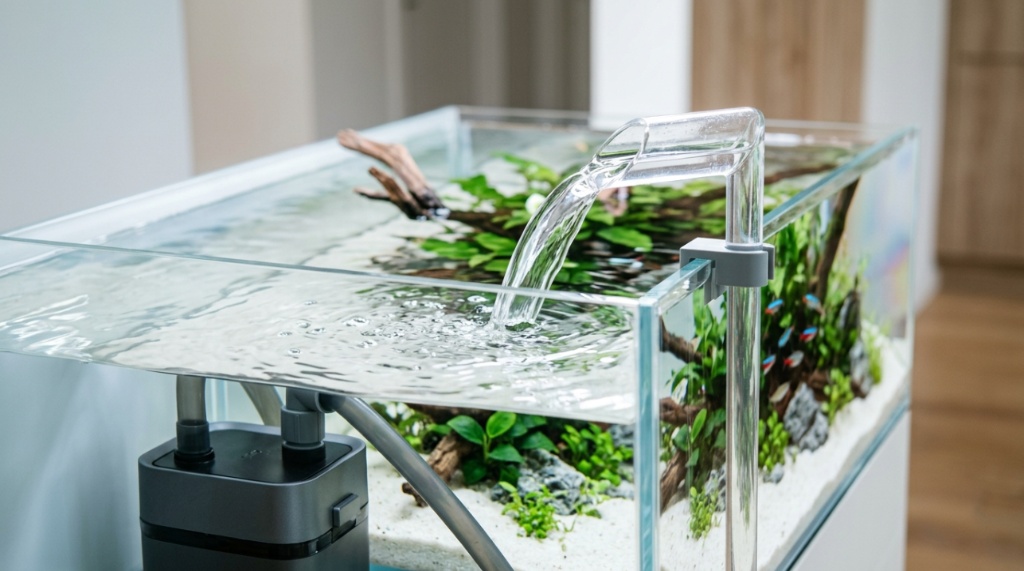
Rinse mechanical media (sponges, pads) in old tank water every 2–4 weeks. Replace chemical media (carbon, purigen) every 3–4 weeks. Never replace biological media all at once.
Here is a simple schedule:
- Mechanical foam/sponge: Rinse monthly; replace when it becomes brittle or disintegrates (every 6–12 months).
- Filter floss: Replace during each cleaning if it is too dirty to rinse well.
- Activated carbon: Replace every 3–4 weeks because it loses adsorption capacity.
- Bio-media (ceramic rings, bio-balls): Never replace all at once. If they become clogged with sludge, rinse a portion in old tank water. Replace no more than 25% at a time.
Cleaning with tap water will kill beneficial bacteria due to chlorine and chloramine. Always use water from your tank during a water change to rinse media. A good rule of thumb: if the filter is noticeably clogged and flow is reduced, it is time for a rinse.
What Additional Equipment Helps Keep Water Clean?
Beyond the filter, a protein skimmer (for saltwater), a UV sterilizer, and a powerhead with a pre-filter can drastically improve water quality.
For freshwater tanks, a powerhead or circulation pump prevents dead spots where debris settles. Adding a pre-filter sponge to the intake of your main filter catches large particles before they enter the filter, reducing maintenance. For planted tanks, a quality CO2 system and lighting timer keep plants healthy, which in turn consume nitrate and compete with algae. A UV sterilizer kills free-floating algae and pathogens, making water crystal clear within days. For saltwater tanks, a protein skimmer removes organic waste before it breaks down, which is essential for coral health.
Consider these add-ons based on your specific setup:
- Planted tanks: CO2 system, nutrient dosing, quality lighting.
- Heavily stocked tanks: Two filters running in parallel for redundancy.
- Nano tanks: Air-driven sponge filter plus a small HOB filter.
Is a Substrate Cleaner Necessary for Clean Water?
Yes, a gravel vacuum is one of the most underrated pieces of maintenance equipment. It removes trapped waste that a filter cannot reach.
Even the best filter cannot suck debris out of your gravel or sand. Uneaten food, fish waste, and plant matter settle into the substrate, decompose, and release ammonia directly into the water. If left uncleaned, this waste fuels algae and degrades water quality. A gravel vacuum—a simple tube with a siphon—sucks up debris during water changes without removing the substrate itself.
How to Use a Gravel Vacuum
- Start a siphon by filling the tube with water or using a pump.
- Push the vacuum end into the gravel and let the water flow.
- Watch the debris lift out—move the vacuum around until the water runs clear.
- Direct the dirty water into a bucket.
Do this during weekly 20–30% water changes. It is the most effective way to remove organic waste from the bottom of your tank and is essential for long-term water clarity.
How Does Water Flow Impact Filtration Efficiency?
Proper water flow ensures all tank water passes through the filter regularly, preventing dead zones where waste accumulates.
Dead zones are areas of the tank with little to no water movement. In these spots, waste settles, oxygen levels drop, and anaerobic bacteria can produce hydrogen sulfide (toxic). To prevent this, aim for a flow rate that moves the entire water volume through the filter 4–6 times per hour. In larger tanks, use two filters or a powerhead to create circulation in the opposite corner from the filter outflow.
Observe your fish behavior. If they struggle to swim or hide in corners, the flow may be too strong. If you see debris gathering in one spot, the flow is too weak. Adjust filter position, add a circulation pump, or use a spray bar to distribute flow evenly.
Finding the right setup doesn’t have to break the bank. If you are looking to upgrade your system on a budget, check out our top recommendations for the Best Affordable Aquarium Filters for Crystal Clear Water to find a high-performing option that fits your price range.
When Should You Upgrade Your Filtration Equipment?
Upgrade your filter when you see persistent water quality issues, when your current filter cannot handle the bioload, or when you upgrade to a larger tank.
Signs it is time for a new filter:
- Water remains cloudy despite regular cleaning.
- Ammonia or nitrite readings are consistently above zero.
- Algae grows uncontrollably even with reduced light.
- Your filter motor is noisy, runs hot, or has stopped working.
- You have added more fish and the current filter struggles.
When upgrading, do not immediately discard the old filter. Run both filters simultaneously for a few weeks to allow beneficial bacteria to colonize the new media. This prevents a bacterial crash. If you are on a budget, start with a larger HOB filter or save for a canister filter, which offers the best long-term value for clean water.
Frequently Asked Questions
How often should I do water changes to keep water clean?
For most aquariums, a 20–30% water change once per week is sufficient. Heavily stocked tanks may need twice weekly changes, while lightly stocked planted tanks can go 10–14 days.
Can I use tap water directly for my aquarium?
No—tap water contains chlorine, chloramine, and sometimes heavy metals. Always treat tap water with a dechlorinator before adding it to your tank, or use RO/DI water for sensitive setups.
What is the best filter for a beginner?
A hang-on-back (HOB) filter rated for your tank size is the easiest for beginners. It is simple to install, maintain, and offers good mechanical, chemical, and biological filtration.
Does a UV sterilizer replace a filter?
No. A UV sterilizer kills algae and pathogens but does not remove debris or convert ammonia. It is a supplement to your main filter, not a replacement.
Why does my water stay cloudy even with a good filter?
Cloudiness can be bacterial bloom (common in new tanks), fine particulate matter, or an algae outbreak. Test your water, increase mechanical filtration (micron pads or floss), and reduce feeding temporarily.
Should I run my filter 24/7?
Yes. Your filter must run continuously to maintain the biological cycle and keep water moving. Turning it off for hours can cause beneficial bacteria to die off and water quality to drop rapidly.
Can I use a filter from a smaller tank on a larger tank?
No—undersized filters cannot handle the waste load. Always match or exceed the filter’s recommended tank size. Overfiltering is safe, but underfiltering leads to poor water quality and stressed fish.
Conclusion
Keeping aquarium water clean boils down to three pillars: the right filtration equipment, consistent maintenance, and routine testing. Start with a filter suited to your tank size and bioload, clean it regularly with tank water, and test your parameters weekly. Pair your filter with a gravel vacuum during water changes, consider additional equipment like a UV sterilizer or circulation pump if needed, and never neglect the biological side of filtration. You do not need the most expensive gear—just the right gear used correctly. Crystal-clear water is not a miracle; it is the result of smart choices and a few minutes of consistent care each week.