If you’re hunting for a skateboard that can handle California’s unique terrain—from smooth beachfront paths to rugged street spots—Santa Cruz Skateboards probably sits near the top of your list. With decades of history and a reputation for durable decks, the brand has become a staple for skaters across the state. But finding the right model isn’t always straightforward. With so many options, sizes, and retailers to choose from, it’s easy to end up with a board that doesn’t match your riding style or local conditions. This guide breaks down exactly how to identify the best options, where to look, and what details actually matter when you’re shopping for top-rated Santa Cruz skateboards CA skaters trust.
Key Takeaways
- Santa Cruz offers distinct product lines—from premium pro models to budget-friendly completes—so knowing the difference prevents overpaying or underperforming.
- Deck width matters more than most beginners realize; it should match your shoe size and riding style for better control.
- Authenticity is a real concern in CA due to counterfeits; checking the deck’s construction and graphics helps you avoid fakes.
- Local skate shops often provide better value than big-box retailers because they offer expert advice and often include setup services.
- For a quick reference on the most reliable models and where to buy them, check this list of top-rated Santa Cruz skateboards CA skaters recommend.
Why Santa Cruz Skateboards Dominate the California Scene
Santa Cruz Skateboards isn’t just a brand; it’s a piece of skateboarding history. Founded in 1973 in the namesake coastal city, the company has survived every trend and shift in the industry. That longevity isn’t accidental. The brand’s commitment to quality wood, reliable glue-ups, and consistent concave shapes has kept it relevant for over five decades. In California, where skateboarding is practically a lifestyle, Santa Cruz boards are known for their pop and durability—two qualities that matter when you’re skating day in and day out.
What sets Santa Cruz apart from other brands is the balance they strike between innovation and tradition. While some companies chase hyper-specific niche shapes, Santa Cruz maintains a lineup that suits everyone from street skaters to transition riders. Their decks feature a medium-depth concave that feels comfortable for most skaters, and the wheelbase options are thoughtful enough to accommodate different heights and stances. This versatility is a big reason why you’ll see Santa Cruz boards at skateparks from San Diego to San Francisco.
Understanding the Santa Cruz Product Lineup
Before you start shopping, it’s essential to understand that Santa Cruz produces several distinct product tiers. Knowing the difference helps you make a smarter purchase based on your budget and skill level.
Pro Decks vs. Complete Skateboards
Pro decks are the bare plywood boards that professional skaters ride. These are the highest quality, featuring premium North American maple and the brand’s signature “Screaming Hand” graphics. They’re designed for skaters who already have their own trucks, wheels, and bearings. If you’re building a custom setup or replacing a worn-out deck, this is the tier you want.
Complete skateboards, on the other hand, come fully assembled. Santa Cruz offers both entry-level completes (often under $100) and higher-end completes that feature better components. The distinction matters because the cheaper completes use basic bushings and bearings, which may not perform well for advanced tricks. However, for a beginner or someone casually cruising, these budget-friendly options are perfectly functional.
Vintage Reissues and Modern Shapes
Santa Cruz has a unique niche with their vintage reissue line. These boards replicate the exact shapes, graphics, and dimensions of iconic decks from the 1970s and 1980s. They’re popular among collectors and older skaters looking for nostalgia. However, they often feature a flatter profile and stiffer feel compared to modern popsicle-style decks. If you plan on doing flip tricks or technical street skating, a modern shape is a better choice. If you’re into cruising, carving, or just want a wall-hanger with history, the reissues are appealing.
How to Choose the Right Deck Size for Your Riding Style
Deck width is arguably the most critical factor when selecting a skateboard. It influences stability, flip speed, and how comfortable you feel on the board. There’s no universal “best” size, but rather a range that suits different foot sizes and disciplines.
Width Recommendations by Skater Type
For street skating and technical tricks, narrower decks (7.75″ to 8.0″) are more responsive. They flip faster and are easier to spin, but they require better balance. For transition skating, vert, or cruising, wider decks (8.25″ to 8.5″) provide a more stable platform. They’re heavier, which makes them harder to flip, but they absorb the impact of landing better.
A practical rule of thumb is to match the deck width to your shoe size. If you wear a US size 8-9, an 8.0″ to 8.125″ deck is a comfortable starting point. If you wear a size 10-11, look for something in the 8.25″ to 8.5″ range. This isn’t a strict rule, but it prevents your feet from hanging off the edges too much, which reduces foot fatigue and improves control, To build a complete setup, check out our guide on Skateboard Parts Explained: Trucks, Bearings, Wheels and Hardware to choose the best components for your deck.
Where to Buy Authentic Santa Cruz Boards in CA
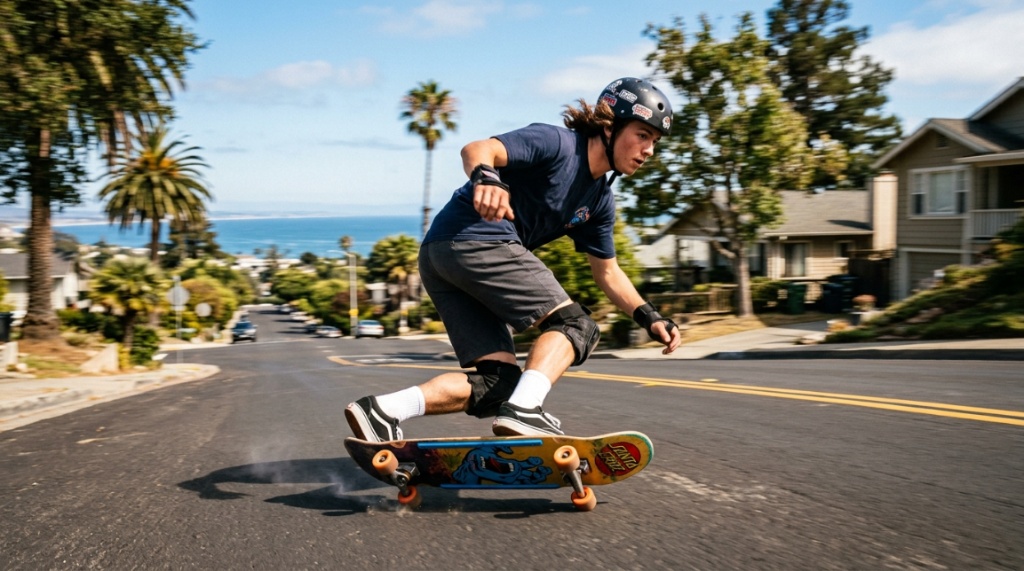
Finding a genuine Santa Cruz skateboard in California is easy, but finding one at the right price with good advice requires a bit of strategy. Your choice of retailer can significantly impact your experience.
Local Skate Shops vs. Online Retailers
Local skate shops are the backbone of the skateboarding community. They employ skaters who understand the products and can offer real-time advice about what works best for your local terrain. Many shops also let you stand on the deck to feel the concave and flex, which is something online shopping can’t offer. Plus, buying local supports the California economy and keeps the culture alive.
Online retailers like the official Santa Cruz website, Skatewarehouse, or CCS often have larger inventories and better clearance prices. However, you lose the tactile experience, and you have to pay for shipping. When buying online, always check the return policy. Some retailers charge restocking fees if you buy the wrong size, which can be a hassle.
Red Flags for Counterfeit Products
Counterfeit skateboards are a genuine problem, especially on marketplaces like Amazon or eBay. Fake Santa Cruz boards often have misprinted graphics, use cheaper wood that delaminates quickly, and have incorrect drill hole patterns that don’t fit standard trucks. To avoid this, inspect the product photos carefully. Authentic Santa Cruz decks have an engraved serial number or a foil sticker on the top ply. If the price seems too good to be true—like a pro deck selling for $20—it’s almost certainly a fake. Stick to authorized dealers listed on the Santa Cruz website to guarantee authenticity.
Evaluating the Components on a Complete
If you’re buying a complete, don’t just look at the deck graphic. The quality of the trucks, wheels, and bearings determines how the board actually rides. Santa Cruz completes vary widely in component quality.
On budget completes, you’ll typically find softer wheels (around 95A durometer) that are great for cruising over rough California pavement but terrible for sliding or park skating. Higher-end completes feature harder wheels (99A-101A) that are better for skateparks and street tricks. Trucks on budget models are usually heavier and use generic bushings that don’t turn smoothly. Upgrading these later is possible, but you’ll end up spending more than if you bought a better complete initially.
If your goal is to learn tricks and progress quickly, it’s worth spending slightly more on a mid-tier complete. The better components will last longer and improve your ability to learn, whereas you’ll outgrow a budget board within a few months. For casual cruising, however, the entry-level complete is perfectly fine and offers excellent value for the price.
Common Mistakes to Avoid When Buying Santa Cruz Skates
Many first-time buyers make a few predictable errors that lead to frustration. Being aware of these can save you time and money.
- Ignoring wheelbase length: The wheelbase (distance between the truck bolts) affects how the board feels when you turn. Taller skaters should look for a longer wheelbase (14.25″ or more) to avoid foot placement issues.
- Buying a mini deck for an adult: Mini decks are designed for children under 12. An adult riding an 8.0″ deck will likely find it too small and unstable.
- Forgetting about grip tape quality: Some budget completes have cheap grip tape that wears out quickly or doesn’t stick well to the deck. If the grip feels slick out of the box, replace it immediately.
- Choosing graphics over performance: While the screaming hand graphics are cool, don’t buy a board solely for the artwork. Prioritize the shape, width, and construction over the visual design.
Matching the Board to California’s Terrain
California isn’t a monolith when it comes to skateboarding. The terrain in Los Angeles is different from the Bay Area or the Central Coast. Consider where you’ll be skating most frequently.
In coastal cities like Santa Cruz or Huntington Beach, you’ll often skate smooth concrete paths and bowls. A wider deck with softer wheels (85A-90A) will make cruising more comfortable and handle the wind and slight inclines better. Inland cities like Riverside or Sacramento have more street spots with rough asphalt and gaps. Here, a harder wheel (99A-101A) and a medium-width deck (8.125″-8.25″) offer better durability and pop for ledges and stairs.
Also, consider the dryness of the climate. California’s dry heat can dry out the glue in cheaper decks faster, causing delamination. Higher-quality Santa Cruz decks use water-based glues that are more resistant to temperature swings. If you plan to leave your board in your car in the summer, a premium deck will hold up significantly better than a bargain bin option.
Frequently Asked Questions
Are Santa Cruz skateboards good for beginners?
Yes. Santa Cruz offers excellent beginner-friendly complete skateboards with soft wheels and a stable platform. The key is to avoid the smallest sizes and stick to an 8.0″ deck or wider for better balance. They are durable enough for learning without breaking the bank.
How long does a Santa Cruz deck last?
With moderate use (skating 2-3 times a week), a Santa Cruz deck lasts about 2-3 months before losing its pop. Heavy street skaters may replace them monthly, while casual cruisers can make a deck last 6 months or longer if they rotate it to avoid pressure cracks.
What is the difference between Santa Cruz and Santa Cruz Skateboards?
Santa Cruz is the surf and apparel brand, while Santa Cruz Skateboards is the specific skateboard division. Both share similar ownership and often use the same logos, but the skateboard division focuses solely on decks, completes, and skate hardware. Buying from the skateboard division ensures you get actual skate components.
Can I ride a Santa Cruz vintage reissue for tricks?
Technically, yes, but it’s not recommended for modern street tricks. The vintage reissues have a flat nose and tail that make kickflips and pop shuvits challenging. They are better suited for carving, bowl riding, or collecting. For standard flip tricks, choose a modern popsicle shape.
Do I need to buy bearings separately for a Santa Cruz complete?
No. All completes come with bearings installed. However, the quality of bearings varies. Budget completes include standard ABEC-3 bearings, which are fine for cruising. If you want faster rolls or plan on sliding, you’ll eventually need to upgrade to ABEC-5 or ceramic bearings.
Conclusion
Finding the right Santa Cruz skateboard in California comes down to understanding your skill level, local terrain, and budget. Don’t get distracted by flashy graphics or nostalgia. Focus on deck width, component quality, and buying from a trusted source. Whether you start with an affordable complete or build a custom pro-level setup, the most important thing is that the board fits you and the spots you ride. Take your time to compare models, read reviews, and—if possible—step on a few decks at your local shop before committing.