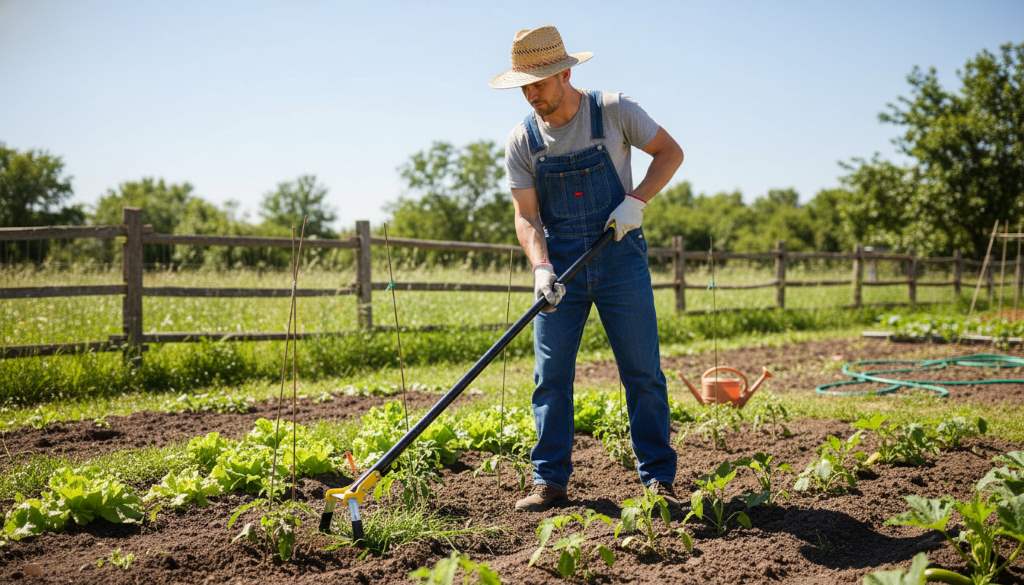
Weeds invade gardens quickly and steal nutrients from your plants. Many gardeners reach for chemical herbicides, but those options harm soil, wildlife, and even human health. Manual weeding with hand tools offers a safer, more sustainable way. You remove weeds at the root and improve your garden’s long-term vitality.
Studies show the risks of chemicals. The EPA reports that herbicides can impact aquatic life and non-target species. Meanwhile, the Environmental Working Group found pesticide residues on over 75% of non-organic produce in recent tests. Manual methods avoid these issues entirely. Plus, you build better soil structure through gentle disturbance.
To start effectively, check out Weed Control Hand Tools that simplify the process. These tools make weeding faster and less back-breaking.
Gardeners worldwide switch to chemical-free methods for good reasons. This approach protects your family, pets, and local ecosystem.
Why Go Chemical-Free for Weed Control?
Chemical herbicides promise quick results, but they come with hidden costs. Runoff pollutes waterways, and residues linger in soil. Beneficial insects suffer, and weed resistance grows over time.
Manual weeding sidesteps these problems. You target weeds precisely without collateral damage. Soil microbes thrive when you avoid synthetic inputs. Over time, your garden develops natural resilience.
Moreover, physical weeding exercises your body and connects you to the land. Many gardeners find it therapeutic. Research from university extensions confirms that consistent manual control reduces weed pressure season after season.
Organic gardeners rely on these methods successfully. They prove you can maintain beautiful spaces without chemicals. You just need the right tools and techniques.
Benefits of Manual Weed Control
Manual methods deliver multiple advantages. First, they preserve soil health. Tilling lightly aerates the ground without destroying structure. Chemical applications often compact soil and kill earthworms.
Second, you protect pollinators. Bees and butterflies visit your garden safely. Chemical drift harms these essential creatures, but hand tools pose no threat.
Third, manual control saves money long-term. You invest once in quality tools and use them for years. Herbicides require repeated purchases.
Additionally, you gain better control over persistent weeds. Tools let you extract deep roots that sprays often miss. This prevents regrowth effectively.
Gardeners also report higher crop yields in organic systems. Plants grow stronger without chemical stress. Your vegetables taste better too.
Essential Hand Tools for Effective Weeding
Quality tools make all the difference. Choose durable options that fit your body and garden size. Here are the most useful ones.
The Scuffle Hoe (Stirrup Hoe)
Scuffle hoes slice weeds just below the soil surface. You push and pull the blade through the top layer. This severs roots and leaves weeds to dry out.
These tools excel in pathways and between rows. They work best on young weeds. The oscillating action reduces effort significantly.
Long-Handled Hoe
Traditional long-handled hoes chop tougher weeds. You swing the blade to cut stems at ground level. This tool covers large areas quickly.
Choose a sharp, sturdy blade. It handles established weeds better than scuffle types.
Hand Weeder or Dandelion Diggers
Hand weeders feature forked tips that grip taproots. You insert the tool beside the weed, lever, and pull. Dandelions and thistles come out whole.
These tools shine for spot treatment in flower beds. They minimize disturbance to nearby plants.
Garden Fork or Cultivator
Twist forks loosen soil around perennial weeds. You dig deeply and lift roots intact. This prevents fragmentation and regrowth.
Three or four-tine models work well. They also aerate soil as you weed.
Stand-Up Weed Pullers
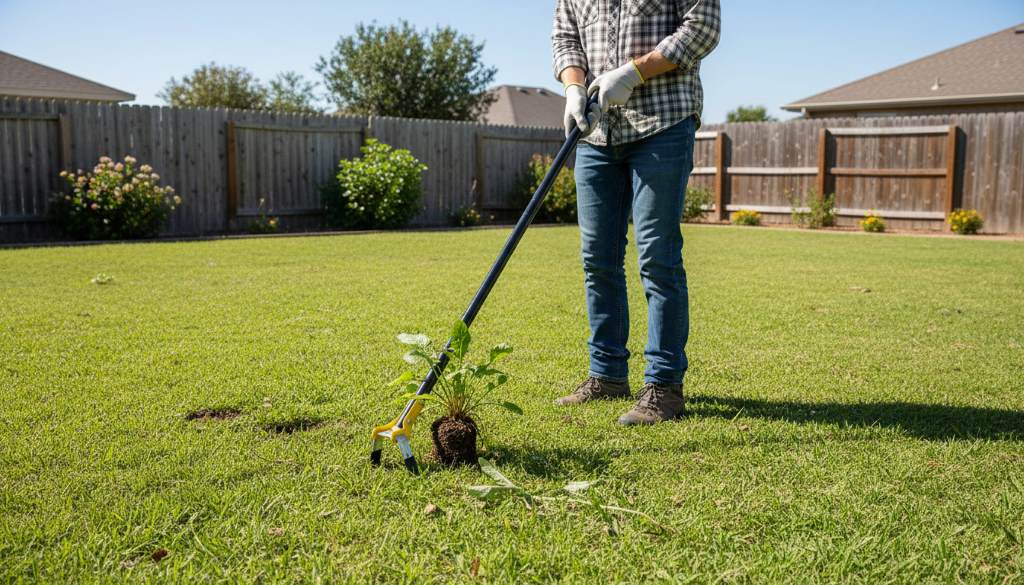
Stand-up pullers let you remove weeds without bending. You step on a lever, grab the weed with claws, and extract it. These tools save your back on large lawns.
Models like Grampa’s Weeder or Fiskars versions prove popular. They handle deep-rooted weeds efficiently.
Hori Hori Knife
Japanese hori hori knives combine digging and cutting. The serrated edge saws through tough roots. You also use the pointed tip for precise extraction.
This multi-tool serves many garden tasks beyond weeding.
How to Choose the Right Tool for Your Garden
Consider your garden type first. Vegetable beds benefit from scuffle hoes and cultivators. Lawns need stand-up pullers.
Think about weed types too. Annuals die easily from surface cutting. Perennials demand root removal tools.
Ergonomics matter. Long handles reduce strain for taller gardeners. Lightweight tools suit smaller spaces.
Invest in stainless steel when possible. These resist rust and stay sharp longer. Wooden handles feel comfortable but require maintenance.
Start with three core tools: a scuffle hoe, hand weeder, and long-handled hoe. Add others as needs arise.
Step-by-Step Techniques for Manual Weeding
Success depends on proper technique. Follow these steps for best results.
Prepare the Soil
Weed after rain or watering. Moist soil releases roots more easily. Dry conditions suit hoeing, as cut weeds desiccate faster.
Wear gloves and knee pads. Protect your hands and joints during longer sessions.
Hoeing Technique
Stand comfortably and hold the tool at waist height. Push the scuffle hoe forward to slice weeds. Then pull back to cover the same area.
Work in straight lines between rows. Overlap passes slightly for complete coverage. Leave severed weeds on the surface to dry.
Hand Pulling Deep Roots
Locate the weed base. Insert your tool beside the root. Rock gently to loosen soil.
Grip firmly and pull straight up. Twist slightly if needed. Shake off excess dirt and compost the weed if seed-free.
Dealing with Tough Perennials
Dig a circle around the weed first. Loosen soil deeply with a fork. Lift the entire root mass.
Check for fragments. Even small pieces regrow for bindweed or horsetail.
Timing Your Weeding Sessions
Weed little and often. Weekly passes prevent weeds from seeding. Early morning sessions feel pleasant and effective.
Attack young weeds aggressively. They remove easily and compete less with crops.
Related:
Extend Your Garden with a Wooden Bridge: A Beautiful Addition
Green Thumb or Brown Thumb? How to Start a Thriving Garden
Best Practices for Long-Term Weed Reduction
Prevention beats cure every time. Combine tools with smart strategies.
Mulching
Apply thick organic mulch after weeding. Straw, wood chips, or leaves block light and suppress germination.
Mulch also retains moisture and feeds soil. Reapply as it decomposes.
Dense Planting
Plant crops closely to shade soil. Fast-growing cover crops like clover crowd out weeds.
Companion planting helps too. Marigolds repel certain pests and compete with weeds.
Crop Rotation
Rotate plant families yearly. This disrupts weed life cycles. Different crops attract different weeds.
Soil Health Focus
Build fertile soil with compost. Healthy plants outcompete weeds naturally. Avoid bare soil that invites invasion.
Common Weeds and Targeted Removal Strategies
Different weeds require specific approaches.
Dandelions
Use a forked weeder for full taproot removal. Go deep to prevent regrowth.
Crabgrass
Hoe early when small. Pull larger clumps by hand before seeding.
Bindweed
Dig extensively to trace vines underground. Remove every root section patiently.
Thistles
Wear thick gloves. Cut flower heads first to stop seeding. Dig roots completely.
Chickweed
Pull easily when young. It spreads rapidly if allowed to flower.
Maintaining Your Hand Tools
Sharp tools work better and reduce effort. Clean blades after each use. Remove soil and sap.
Sharpen hoes regularly with a file. Store tools dry to prevent rust.
Oil metal parts occasionally. Check handles for cracks and replace as needed.
Proper care extends tool life for decades.
Real Gardener Stories and Tips
Sarah from Maryland transformed her yard manually. She pulled weeds weekly and mulched heavily. Within two years, weed pressure dropped dramatically.
John uses only a scuffle hoe in his vegetable plot. He weeds on dry days and leaves cuttings to dry. His soil improved noticeably.
These examples show persistence pays off. Start small and build habits.
Potential Challenges and Solutions
Back strain affects many beginners. Use proper posture and take breaks. Stand-up tools help significantly.
Time commitment concerns others. Short daily sessions prove more effective than marathon efforts.
Persistent weeds frustrate everyone. Combine tools and prevention for victory.
Weather impacts progress. Plan around rain for easier pulling.
Conclusion
Manual weed control with hand tools builds healthier gardens. You avoid chemicals while gaining precise, effective results. Choose quality tools, learn proper techniques, and stay consistent.
Your garden will thrive naturally. Soil improves, plants strengthen, and wildlife returns. Start today with small areas and expand confidence.
Take action now. Grab your tools, head outside, and enjoy the satisfaction of a weed-free space you created safely.
FAQs
How often should I weed manually?
Weed weekly during growing season. Catch weeds young for easier removal. Adjust based on rainfall and weed growth.
Can manual weeding completely eliminate weeds?
No method eliminates weeds forever. Consistent effort reduces them dramatically. Prevention strategies minimize future problems.
What’s the best time of day to weed?
Early morning works well. Soil stays moist from dew, and temperatures remain cooler. Avoid midday heat.
Do hand tools damage plant roots?
Proper technique minimizes damage. Work carefully around desired plants. Use narrow tools in crowded beds.
Is manual weeding suitable for large gardens?
Yes, with planning. Focus on high-priority areas first. Use long-handled tools for efficiency in bigger spaces.
References
- University of Maryland Extension: Manage Weeds Without Chemicals in Maryland – https://extension.umd.edu/resource/manage-weeds-without-chemicals-maryland
- Royal Horticultural Society: Non-chemical weed control – https://www.rhs.org.uk/prevention-protection/weeds-non-chemical-control
- US EPA: Herbicides Overview – https://www.epa.gov/caddis/herbicides
- National Pesticide Information Center: Glyphosate Technical Fact Sheet – https://npic.orst.edu/factsheets/archive/glyphotech.html