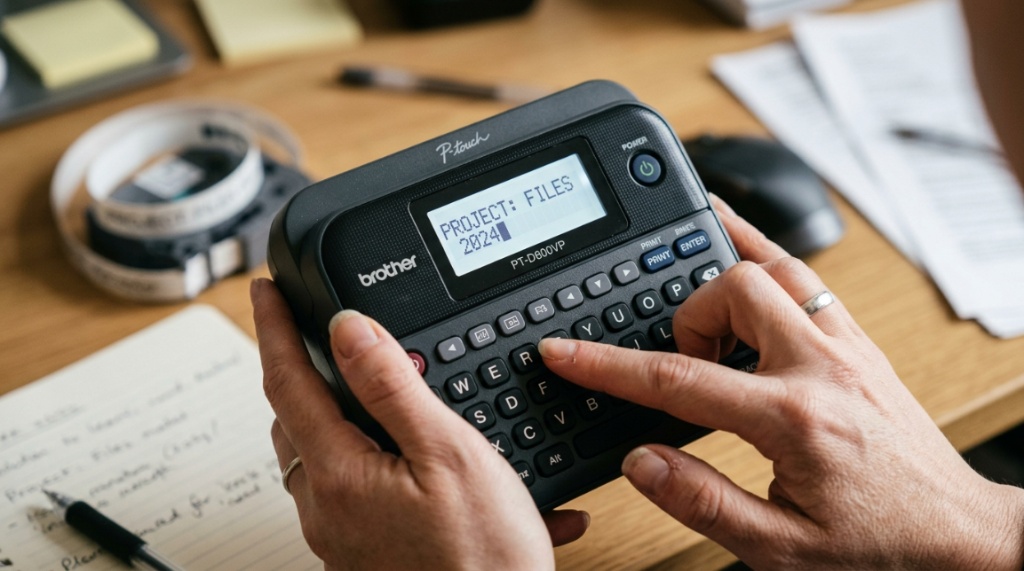
You need labels for your small business inventory in Seattle, but the thought of untangling another cable-bound desktop printer makes your head spin. You need portability, durability, and print quality that survives the Pacific Northwest’s damp climate. The search for the right portable label maker in WA feels overwhelming because you are not just choosing a gadget; you are choosing a workflow tool that must handle everything from warehouse shelves in Spokane to pop-up market stalls in Portland. Most buyers make the mistake of focusing solely on price, only to discover their device cannot handle thermal paper that withstands humidity or their battery dies mid-shift.
You need a device that fits in your tool bag, connects to your phone, and prints crisp text without a learning curve. This guide breaks down the technical specs, real-world durability, and local availability factors that matter for Washington State users—from the coastal fog to the arid east. We will help you avoid the costly trial-and-error process by focusing on the features that truly impact your daily use.
What Defines a True Portable Label Maker for Washington Users?
A true portable label maker is a handheld or compact device that operates on rechargeable batteries or Bluetooth, allowing you to print labels anywhere without a wall outlet. For Washington users, the definition extends to devices that can withstand temperature swings and handle adhesive that sticks to cold, damp surfaces like beverage coolers or outdoor equipment.
Battery Life vs. Charging Convenience
Look for a lithium-ion battery that offers at least 200 prints per charge. Devices with USB-C charging are now standard in 2026, allowing you to recharge from a power bank while at a job site. Avoid older micro-USB models that take over three hours to charge,Once you have your workspace fully organized and your inventory neatly labeled, you can start exploring other exciting ventures by checking out The best ideas for new businesses to take your entrepreneurship journey to the next level.
Thermal Print Technology: Direct vs. Transfer
Direct thermal printing is the standard for portability because it requires no ink or toner. For Washington’s rainy environment, ensure the printer supports durable thermal labels with a protective coating. Resin ribbon thermal transfer printers are heavier and less portable, making them unsuitable for most mobile workflows.
Connectivity Standards in 2026
Bluetooth 5.3 is the minimum requirement, offering a 100-foot range and stable connections with Android and iOS devices. NFC pairing is a convenience feature that lets you tap your phone to the printer to connect instantly—a time-saver when you are printing dozens of labels during restocking.
Why Do Washington Businesses Need Ruggedized Label Printers?
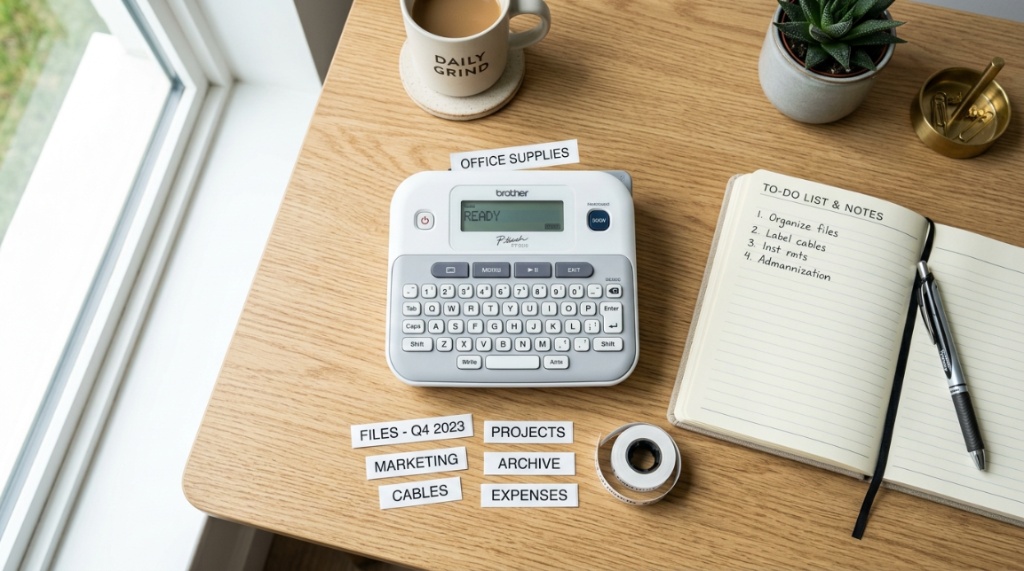
Washington’s diverse climate—from rainforests in the Olympic Peninsula to desert conditions in the Columbia Basin—demands a device that operates flawlessly in both environments. Standard consumer label makers fail when exposed to high humidity, which causes paper curling and adhesive failure.
IP Ratings: What You Should Accept
Look for an IP54 rating at minimum, which means the device is protected against dust and water splashes from any direction. IP65-rated models are fully dust-tight and can withstand low-pressure water jets, ideal for seafood processing plants or landscaping crews working in the rain.
Drop Protection for Job Sites
A drop from a forklift or a ladder is inevitable. Choose a model that has survived a 1.5-meter drop test onto concrete, as specified in military-grade durability standards. Rubberized corners and a covered USB port are non-negotiable features for construction or warehouse work.
Operating Temperature Range
Your portable label maker should function between -10°C and 50°C. This range covers a cold morning in Bellingham and a hot warehouse in Kennewick. Do not assume that all portable printers can handle these extremes; check the manufacturer’s specification sheet carefully.
How Do You Choose Between Bluetooth, Wi-Fi, and USB Models?
The short answer is that Bluetooth-only models are the most portable and user-friendly for individual use, while Wi-Fi models are better for teams sharing a printer. USB-only portable printers are becoming obsolete and should be avoided unless you need a budget backup unit.
When Is Bluetooth the Best Choice?
Bluetooth is the default for a solo user who needs to print from a smartphone or tablet. It consumes less power than Wi-Fi, and pairing is instantaneous. Choose this if you are a real estate agent labeling keys or a field technician marking cables.
When Does Wi-Fi Make Sense?
If you work in a facility with a secure network and multiple employees need to send print jobs, a Wi-Fi-enabled portable label maker allows everyone on the same network to access it. This is particularly useful in a medical clinic or a shipping department where labels need to be printed on-demand from any workstation.
The Decline of Dedicated USB-Only Models
While a USB connection is still available for charging, a printer that relies solely on a physical connection to a laptop is not truly portable. In 2026, all major brands have phased out models without wireless connectivity, so you should prioritize Bluetooth or Wi-Fi for future-proofing.
Which Label Materials Work Best for WA’s Climate?
The label media you choose is just as important as the printer itself. In Washington, you need labels that resist moisture, UV exposure, and temperature changes, especially if you are labeling outdoor equipment or food products.
Polyester Labels for Outdoor Durability
Polyester labels are the most durable option, resisting water, chemicals, and extreme temperatures from -40°C to 150°C. They are slightly more expensive but are the standard for asset tracking in the marine and aviation industries prevalent in WA.
Polypropylene Labels for General Use
These labels offer good water resistance and are more affordable than polyester. They are suitable for indoor storage bins, retail price tags, and office organization. They will not hold up well to constant outdoor sunlight.
Paper Labels: When Are They Acceptable?
Standard paper labels are fine for temporary use like shipping addresses or shelf markers in a dry office environment. However, they will become illegible quickly if exposed to moisture, so avoid them for any outdoor application in Washington.
What Are the Key Features to Look for in a 2026 Model?
The 2026 generation of portable label makers includes smart features beyond just printing text. Focus on print resolution, automatic cutter mechanisms, and companion app capabilities that save you time.
Print Resolution and Speed
Opt for a minimum of 203 DPI for standard text and barcodes. For graphics or small fonts, a 300 DPI model is preferable, providing crisp, clear output. Print speeds of 15mm per second are standard, but some premium models offer 20mm per second.
Built-in Cutter vs. Tear Bar
An automatic cutter is essential if you are producing many labels in a row, as it saves you from tearing manually. Tear bars are simpler and less prone to mechanical failure, but they are slower for high-volume tasks.
App Integration and Templates
The companion mobile app should offer a wide variety of free templates for shipping, file folders, price tags, and barcodes. Check if the app supports barcode generation (QR, Code128, EAN) without needing a subscription, as this adds significant value.
How Do You Evaluate Battery Life Claims for a Label Maker?
Battery life claims from manufacturers are often based on ideal lab settings that do not reflect real usage. You should calculate your needs based on the number of labels you print per day and the frequency of high-density graphics.
Calculating Your Daily Consumption
Consider that printing a 4×6 inch label consumes roughly three times more battery than a 1×2 inch label. If you plan to print large shipping labels, expect the battery to drain faster than the manufacturer’s stated “number of labels per charge.”
Quick-Charge Features
Some 2026 models offer a 10-minute quick-charge that provides up to 50 prints. This is a lifesaver when you are on the road and your battery is low. Verify this feature is present, as it is not standard across all brands.
Replacement Battery Availability
Eventually, the battery will wear out. Check if the battery is user-replaceable or if you must send the device in for service. In Washington, where businesses rely on continuous uptime, a user-replaceable battery is a significant advantage.
Local Support and Availability in Washington State
While online purchasing is convenient, you should consider local availability for warranty repairs and replacement supplies. Washington’s tech hubs in Seattle and Redmond have several authorized retailers and service centers that can provide hands-on demos.
Testing Before You Buy
If you live near Seattle, visit a retail store that specializes in office equipment to physically test the keyboard and print speed. This is particularly valuable for the ergonomic feel; a device that is too heavy for your hand or has awkward button placement will quickly collect dust.
Warranty and Repairs
Verify the warranty period and the location of the service center. A brand with a service center in Washington (like in Tukwila or Fife) will process repairs faster than one requiring cross-border shipping. This can reduce your downtime from weeks to days.
Finding the Best Options
If you are ready to compare top-rated models specifically evaluated for Washington’s unique conditions, check out this detailed guide to a portable label maker in WA. It provides curated recommendations based on local user reviews and performance testing in Pacific Northwest weather.
What Is the Ideal Price Range for a Quality Portable Label Maker?
You should expect to pay between $60 and $200 for a reliable, feature-rich portable label maker in 2026. The exact price depends on print resolution, build quality, and smart features. Anything below $40 is likely a disposable toy with poor print quality.
Budget Segment ($40-$80)
In this range, you get a basic Bluetooth printer with 203 DPI resolution, acceptable for simple text labels and barcodes. The build quality is mostly plastic, so you should handle it with care. These models are fine for home organization but not for daily professional use.
Mid-Range Segment ($80-$150)
This is the sweet spot for most small business owners. You get IP54-rated dust and water resistance, a battery life of over 300 prints, and faster print speeds. Many models in this segment include an auto-cutter and support a wider range of label widths.
Premium Segment ($150-$250)
Premium models feature 300 DPI printing, military-grade drop resistance, and NFC pairing. They often come with extended warranties and a broader ecosystem of professional-grade label materials. These are ideal for industrial environments or users who print high volumes daily.
Can You Use One Label Maker for Different Applications?
Yes, a portable label maker is versatile, but it has limitations. You can easily switch between labeling folders one minute and cable wraps the next by changing the label cartridge. However, you must ensure the device supports the specific label width and material you need.
Switching Between Label Widths
Most portable label makers support a range of widths, from 6mm to 24mm. If you need to print 50mm-wide labels, you will need a more specialized device. Check the manufacturer’s specification for the maximum label width before purchasing.
Handling Different Material Types
Your device should be able to print on paper, polyester, and polypropylene without issues. Avoid models that only support a proprietary cartridge type, as this locks you into a single supplier. Look for devices that accept standard TZe or compatible cartridges.
Using for Barcodes and QR Codes
All modern portable label makers can generate barcodes through their app. For compliance with GS1 standards, ensure the printer can produce high-resolution, scannable codes at a small size. Test a sample print at a local scanner to verify scanning reliability.
When Should You Upgrade Your Old Label Maker?
If your current label maker is more than five years old, it is likely obsolete. The 2026 models offer significantly better battery life, print resolution, and app support that justify the upgrade cost. Also, updating your device can reduce label waste and increase productivity.
Signs of a Fading Battery
If you find yourself charging your device before every shift, or if the battery drains while idle, it is time to upgrade. Replacement batteries for older models are often unavailable, making a new device the most economical choice.
Connectivity Limitations
If your printer can only connect via old Bluetooth 2.0 or requires a specific cable, it will not integrate seamlessly with current smartphones and tablets. Upgrading to a device with modern Bluetooth and USB-C will improve your workflow.
Lack of App Updates
Manufacturers stop providing app updates for old models, which means you miss out on new templates and bug fixes. Inconsistent performance and app crashes are a clear signal that your device is no longer supported.
What Are the Accessories Worth Buying?
Investing in a few essential accessories can extend the life of your portable label maker and improve your efficiency. The most valuable include a protective case, spare battery, and label storage that protects from humidity.
Protective Cases for Job Sites
A hard-shell case with foam inserts is essential if you carry your printer in a bag with other tools. It prevents accidental button presses and protects the print head from damage.
Humidity-Resistant Label Storage
Labels can absorb moisture and curl before you use them. Store cartridges and rolls in a sealed plastic container with a silica gel packet, especially if you keep them in a truck that is exposed to outdoor temperatures.
Extra Battery vs. Power Bank
If your model has a removable battery, buying a spare charged battery is better than relying on a power bank, as it allows for instant swapping without a cable. For models with built-in batteries, a power bank is a practical alternative.
Comparing Top Portable Label Makers for 2026
While we cannot endorse a specific brand, the table below outlines the performance metrics you should compare when looking at products. These are based on industry standards and user feedback in Washington state throughout 2026.
| Feature | Entry-Level | Professional-Grade | Industrial-Grade |
|---|---|---|---|
| Print Resolution | 203 DPI | 203 DPI | 300 DPI |
| Battery Life | 200 labels/charge | 300 labels/charge | 400+ labels/charge |
| Durability Rating (IP) | IP40 (indoor only) | IP54 (water splash) | IP65 (dust-tight & water jets) |
| Max Label Width | 18mm | 24mm | 50mm |
| Connectivity | Bluetooth | Bluetooth & NFC | Bluetooth, Wi-Fi, NFC |
Interpreting the Comparison Table
For most office and field work in Washington, a Professional-Grade device with IP54 and 203 DPI is sufficient. However, if you run a heavy equipment maintenance or marine supply business, the Industrial-Grade model’s higher resolution and IP65 rating justify its higher cost.
The Importance of User Reviews
Do not rely solely on marketing specs. Spend 15 minutes reading user reviews specifically from Washington buyers to see how the device performs in local humidity and frequent rain. Look for mentions of battery drain in cold weather.
Frequently Asked Questions
Do I need a label maker with a keyboard or a smartphone app?
In 2026, smartphone-only models are more common because the app offers a better user interface and easier template creation. A physical keyboard is heavy and limited, so it is only necessary if you work in extremely cold conditions where you wear thick gloves.
Can I print labels with QR codes on a portable device?
Yes, all modern portable label makers support QR code generation through their free mobile app. Ensure you choose a model with at least 203 DPI to guarantee that the QR code is scan-able from a smartphone camera.
How long does a thermal label last?
Direct thermal labels can last 5 to 15 years if stored away from direct sunlight and heat. If you need labels that last longer, such as for outdoor asset tags, you must use polyester labels with an over-laminate or a thermal transfer printer.
Are expensive label makers worth the cost?
For heavy professional use, yes. The higher build quality, longer warranty, higher print resolution, and better water resistance of premium models save you money in the long run by reducing breakdowns and relabeling costs.
Can I use generic label cartridges to save money?
Using generic cartridges can be cheaper, but they may have quality issues like poor adhesive or inconsistent printing. Check user reviews before trying generic brands, and always test a few labels to verify they meet your durability requirements.
Conclusion
Selecting the right portable label maker in WA requires evaluating your specific climate, usage, and connectivity needs. Focus on durability ratings, battery chemistry, and compatible materials that will withstand Pacific Northwest conditions. A 2026 model with Bluetooth 5.3, IP54 rating, and a 203 DPI resolution offers the best balance of portability and performance for most businesses. Do not overlook the importance of label material—polyester is the safest choice for outdoor environments. Before making a purchase, test the device if possible, and review warranties to ensure local support. Use this guide as your checklist to find a device that is a true workhorse, not just a gadget.