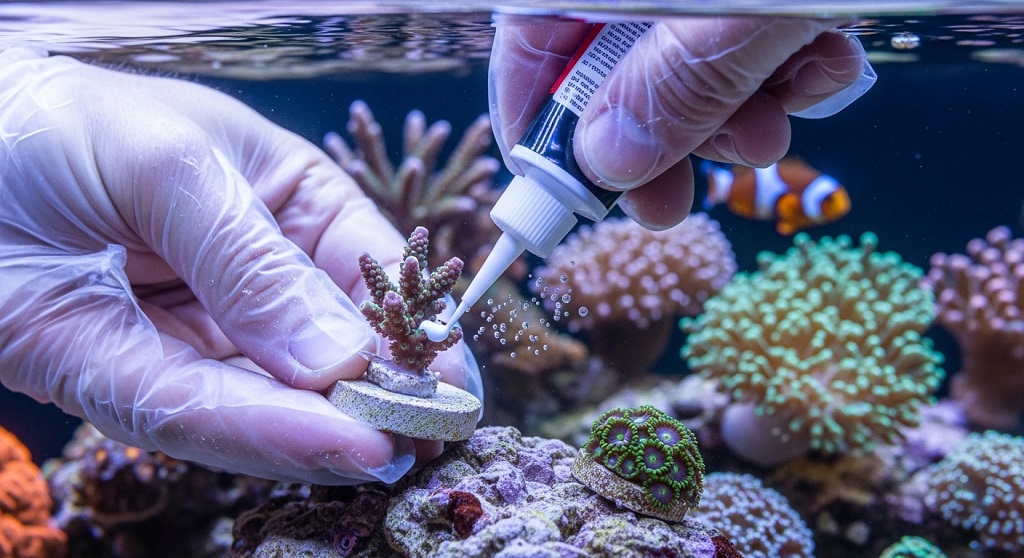
If you place coral frags loosely inside a reef tank, they often shift, fall, or get damaged by flow and fish movement. Learning how to glue coral frags safely prevents stress, improves survival rates, and helps corals grow faster in stable positions.
Coral fragging glue is typically reef-safe cyanoacrylate gel. It bonds quickly underwater and does not release harmful toxins when used correctly. Most reef keepers use gel glue combined with frag plugs or reef rock to secure soft corals, LPS corals, and SPS corals.
According to observations shared by hobbyist reef tracking platforms such as Reef2Reef community build logs and Bulk Reef Supply testing demonstrations, properly mounted coral frags show noticeably higher attachment success within 7–14 days compared to unsecured placement. Stability improves tissue healing and polyp extension.
This guide explains exactly how beginners can glue coral frags safely inside a reef aquarium using simple tools and proven steps. It also covers common mistakes, glue types, positioning strategies, and long-term frag health.
Why Should You Glue Coral Frags Instead of Leaving Them Loose?
Short answer: Gluing coral frags prevents movement, protects tissue, and improves long-term growth stability.
Loose coral frags often fall behind rocks, land upside down, or get buried in sand. These conditions slow recovery after fragging and increase the chance of tissue damage.
Securing coral frags provides several benefits:
- Prevents frag displacement from strong water flow
- Reduces stress during healing
- Improves coral orientation toward light
- Stops fish and invertebrates from moving frags
- Encourages faster encrusting onto rock surfaces
In controlled frag tank comparisons shared by coral propagation hobbyists, glued SPS frags showed faster base encrusting within two weeks compared to unmounted pieces placed directly on substrate.
What Tools Do You Need to Glue Coral Frags Safely?
Short answer: You need reef-safe cyanoacrylate gel, frag plugs or rocks, tweezers, gloves, and a small container of tank water.
Preparing tools before starting helps reduce handling time and stress on corals.
- Cyanoacrylate gel glue (reef safe)
- Frag plugs or live rock surfaces
- Coral cutters or scissors (if trimming)
- Disposable gloves
- Paper towel
- Small bowl of aquarium water
- Tweezers or forceps
Gel glue works better than liquid glue because it stays in place underwater and creates thicker bonds.
Which Type of Glue Is Safe for Coral Frags?
Short answer: Use reef-safe cyanoacrylate gel glue. Avoid industrial adhesives and silicone sealants.
Cyanoacrylate gel is widely used in reef aquariums because it cures quickly and becomes inert once hardened.
Popular glue options include:
- Super glue gel (aquarium safe variants)
- Reef-specific coral glue brands
- Two-part epoxy putty for heavy frags
Bulk Reef Supply demonstrations show cyanoacrylate gel bonds form within seconds underwater and do not affect pH levels when applied in small quantities.
Avoid:
- Hot glue
- Construction adhesives
- Silicone sealants
- Solvent-based glue
How Do You Glue Coral Frags Step by Step?
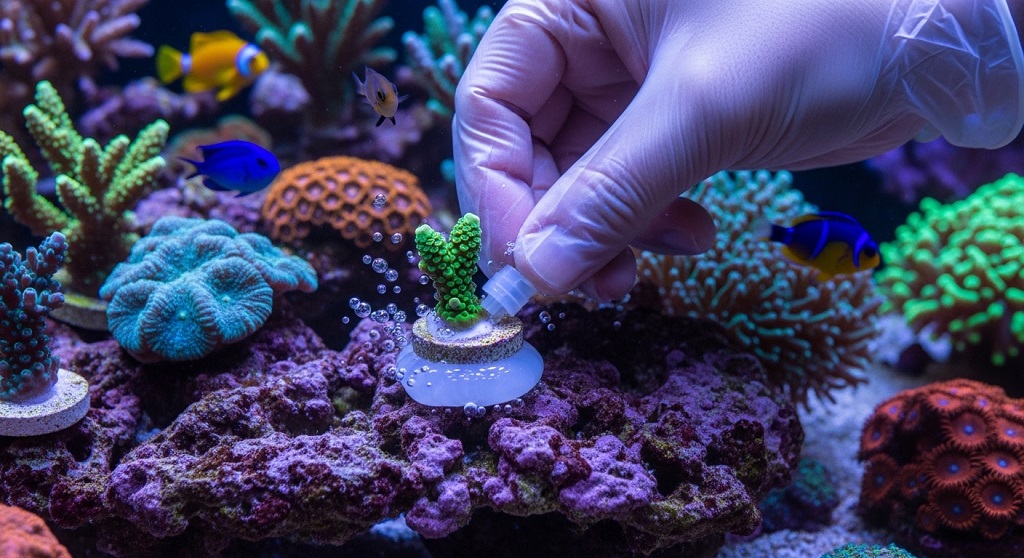
Short answer: Dry the frag base, apply gel glue, press onto rock or plug, and hold for 20–30 seconds before returning to water flow.
Follow this beginner-safe process:
Step 1: Prepare the Placement Area
Select a stable rock surface with proper light exposure and water flow suitable for the coral species.
Step 2: Turn Off Flow Pumps
Switch off wavemakers and return pumps temporarily. This prevents glue displacement.
Step 3: Remove Frag from Water Briefly
Take the frag out for a few seconds. Pat the base dry using paper towel.
Step 4: Apply Glue Gel
Place a small drop of glue on the frag base.
Step 5: Press onto Rock or Plug
Hold firmly for 20–30 seconds until stable.
Step 6: Dip Back into Tank Water
Return frag to water. Glue will form a white outer layer while curing.
Step 7: Restart Water Flow
Turn pumps back on after placement stabilizes.
Can You Glue Coral Frags Underwater Without Removing Them?
Short answer: Yes. Many reef keepers glue coral frags underwater using gel glue directly inside the tank.
Underwater gluing works especially well for:
- SPS corals
- Zoanthids
- Mushroom corals
- Small LPS fragments
Apply glue to frag base outside water first, then press onto rock underwater. A thin cured layer forms instantly and locks placement.
This technique reduces coral air exposure and speeds workflow.
Where Should You Place Coral Frags Inside a Reef Tank?
Short answer: Place coral frags according to their lighting and flow requirements.
Different coral species require different placement zones.
| Coral Type | Placement Level | Flow Requirement |
|---|---|---|
| SPS | Top area | Strong flow |
| LPS | Middle zone | Moderate flow |
| Soft corals | Lower zone | Gentle flow |
Incorrect placement slows attachment and increases stress responses.
How Much Glue Should You Use for Coral Frags?
Short answer: Use a pea-sized drop of glue for most frag bases.
Using too much glue can:
- Cover coral tissue
- Reduce attachment strength
- Create unstable mounting
A thin gel layer creates stronger adhesion than thick glue blobs.
How Long Does Coral Glue Take to Cure?
Short answer: Coral glue begins curing within seconds and fully stabilizes within minutes.
Cyanoacrylate gel reacts instantly with saltwater. However, internal bonding continues strengthening over several minutes.
Most hobbyists wait 5 minutes before restoring strong water flow.
What Mistakes Should Beginners Avoid When Gluing Coral Frags?
Short answer: Avoid overhandling, excess glue, poor placement zones, and unstable rock surfaces.
Common beginner mistakes include:
- Gluing on moving rock structures
- Applying glue to coral tissue instead of base
- Skipping pump shutdown step
- Using liquid glue instead of gel
- Choosing incorrect lighting zones
These mistakes reduce frag survival success.
Is Coral Frag Glue Safe for Fish and Invertebrates?
Short answer: Yes. Reef-safe cyanoacrylate glue is safe once cured.
Scientific aquarium adhesive safety tests confirm cyanoacrylate becomes inert after polymerization. It does not release toxins into marine systems when used correctly.
Still, avoid excessive application.
Can You Use Epoxy Instead of Glue for Coral Frags?
Short answer: Yes. Epoxy works well for large or heavy coral frags.
Two-part epoxy putty helps mount:
- Large LPS corals
- Branching SPS colonies
- Rock-mounted fragments
Many reef keepers combine epoxy with glue gel. Glue secures instantly while epoxy strengthens long-term hold.
How Long Before Coral Frags Attach Naturally to Rock?
Short answer: Most coral frags begin encrusting within 1–3 weeks.
Attachment speed depends on:
- Water parameters
- Lighting strength
- Coral species
- Flow intensity
In SPS propagation tracking logs, visible base spreading often appears within 10–14 days under stable alkalinity conditions.
What Water Parameters Help Coral Frags Attach Faster?
Short answer: Stable calcium, alkalinity, and magnesium improve frag attachment speed.
Recommended reef tank ranges:
| Parameter | Ideal Range |
|---|---|
| Calcium | 400–450 ppm |
| Alkalinity | 8–9 dKH |
| Magnesium | 1250–1350 ppm |
Stable chemistry encourages faster skeletal growth.
Conclusion: What Is the Best Way for Beginners to Glue Coral Frags Successfully?
Learning how to glue coral frags correctly improves survival rates, reduces stress, and supports faster coral growth inside reef aquariums. Using reef-safe cyanoacrylate gel, preparing placement zones carefully, and avoiding common mistakes makes frag mounting simple even for first-time hobbyists.
Stable placement allows corals to adapt faster to lighting and flow conditions. Over time, properly mounted frags encrust onto rock surfaces and develop into full colonies.
If you are starting your reef tank journey, practice mounting a few beginner-friendly corals first. Track attachment progress weekly. Adjust placement when needed. Small improvements in technique produce strong long-term reef health results.
Ready to improve your reef tank stability? Start applying these frag mounting steps today and build a stronger, healthier coral layout that grows naturally over time.
Frequently Asked Questions About How to Glue Coral Frags
Can I glue coral frags without removing them from water?
Yes. Many reef keepers glue coral frags underwater using gel glue. Apply glue outside water first, then press frag into position underwater for faster curing.
Is super glue gel safe for reef aquariums?
Yes. Cyanoacrylate-based super glue gel becomes inert after curing and is widely used in reef tanks.
How long should pumps stay off after gluing coral frags?
Keep pumps off for about 5 minutes. This allows glue to stabilize before strong water movement resumes.
Can coral glue damage coral tissue?
Glue does not damage coral if applied only to the base skeleton. Avoid covering living tissue.
What is the best glue for SPS coral frags?
Thick cyanoacrylate gel works best for SPS coral mounting because it bonds quickly and holds firmly.
Do coral frags grow faster after being glued?
Yes. Stable placement reduces stress and improves encrusting speed compared to loose frag placement.
Can epoxy and glue be used together?
Yes. Many hobbyists combine epoxy putty with gel glue for stronger mounting support.
Read More Also: How to Style Budget-Friendly Crossbody Bags Like a Fashion Pro
Learn More: Top 5 Spinning Rod Handle Replacement Ideas to Upgrade Your Gear